
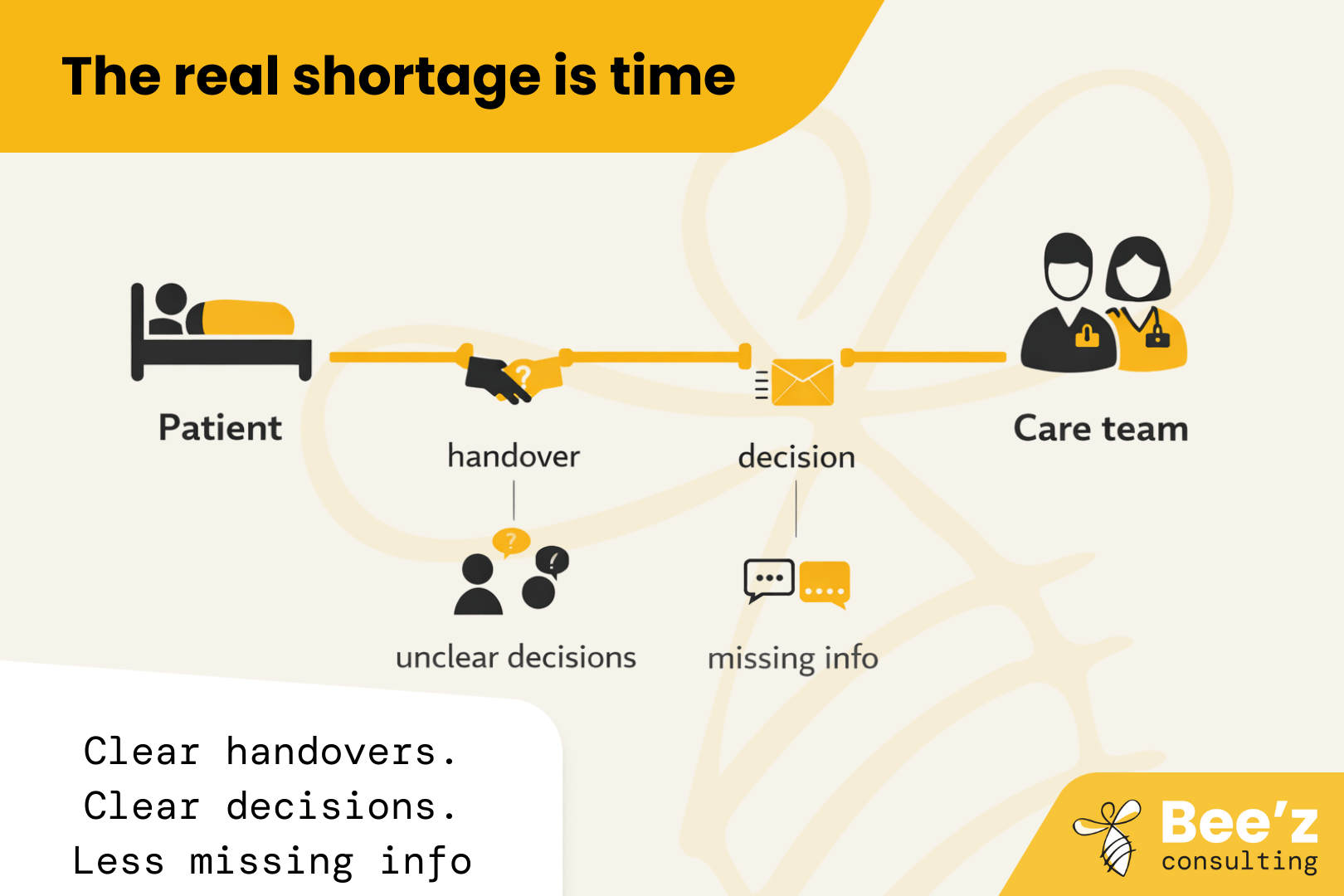
On le constate aujourd’hui dans presque tous les hôpitaux et toutes les cliniques.
Les postes restent vacants. Les plannings sont rafistolés semaine après semaine. Les cadres passent d’une urgence à l’autre. Les équipes font de leur mieux, mais le système reste fragile.
Le réflexe va de soi : « Il nous faut plus de monde. »
C’est parfois vrai.
Mais beaucoup de dirigeants oublient un point.
Même en recrutant, le soulagement attendu peut ne jamais arriver. La contrainte ne tient pas seulement aux effectifs. Elle tient à la façon dont le travail s’organise, dont les décisions se prennent, et au temps que les frictions du quotidien font perdre.
Le McKinsey Health Institute organise l’action sur les effectifs autour de trois leviers : développer, s’épanouir, fidéliser. Développer, c’est élargir le vivier de talents. Fidéliser, c’est garder les professionnels en poste. Le troisième levier, s’épanouir (« Thrive » dans le modèle d’origine, le nom que nous gardons ici), passe souvent au second plan. C’est pourtant l’un des plus rapides pour dégager des marges, parce qu’il rend du temps aux soins.
Quand la pression monte, les directions se concentrent sur ce qui se compte :
Ces indicateurs comptent. Ils peuvent aussi masquer un problème plus profond.
Si le travail quotidien est désorganisé, les nouvelles recrues arrivent en plein désordre. Elles perdent du temps et de l’énergie, et s’épuisent plus vite.
Recruter sans revoir l’organisation du travail, c’est remplir un seau percé.
Demandez aux équipes ce qui les épuise. Elles ne vous parleront pas de « manque de sens ». Vous entendrez plutôt :
« Je passe la moitié de mon temps à courir après des informations. »
« Je saisis les mêmes données à trois endroits différents. »
« La transmission est bâclée. Après, on devine. »
« On attend les validations, puis tout se fait à la dernière minute. »
« Personne ne sait vraiment qui décide. »
« On est sans arrêt interrompus. »
Rien de tout cela n’est une question de motivation. C’est une question de friction.
La friction a un coût. Elle crée des retards, des tâches à refaire, des risques et du stress. Et elle consomme ce qui manque le plus en santé : le temps.
Thrive ne veut pas dire « faire plus avec moins ». Il s’agit d’améliorer le fonctionnement du système pour que les équipes consacrent plus de temps aux soins, avec moins de tâches à refaire et moins de retards évitables.
Concrètement, Thrive, c’est :
Cela paraît élémentaire, et ça l’est. Mais faire simple n’a rien de facile.
On les retrouve dans les grands hôpitaux, les petites cliniques, les centres de rééducation et les établissements de soins. L’échelle change, mais le schéma reste le même.
Un patient change de service. Les informations se perdent. Un détail important reste bloqué dans une boîte mail. Un résultat d’examen reste introuvable.
Alors les équipes font ce qu’elles peuvent. Elles appellent, cherchent, vérifient deux fois, ressaisissent.
Le problème vient du système, pas des équipes.
Quand les transmissions restent informelles, leur qualité dépend de l’équipe en poste et de la charge du moment. La fragilité est dans la méthode elle-même.
Une bonne transmission n’est pas plus longue. Elle est plus claire, parce qu’elle suit chaque fois la même structure.
Si les équipes ne savent pas ce qu’elles peuvent décider, elles font remonter le problème. Puis elles attendent. Et le problème revient, amplifié.
Avec le temps, les équipes en tirent une leçon : « Mieux vaut demander une validation que prendre une décision. »
Cela ralentit tout. Et cela tue la motivation.
Les nouveaux outils s’ajoutent comme des rustines : un formulaire par-ci, un tableur par-là, un fil de discussion, un dossier partagé.
Pris un par un, chacun a du sens. Ensemble, ils pèsent chaque jour sur la charge mentale.
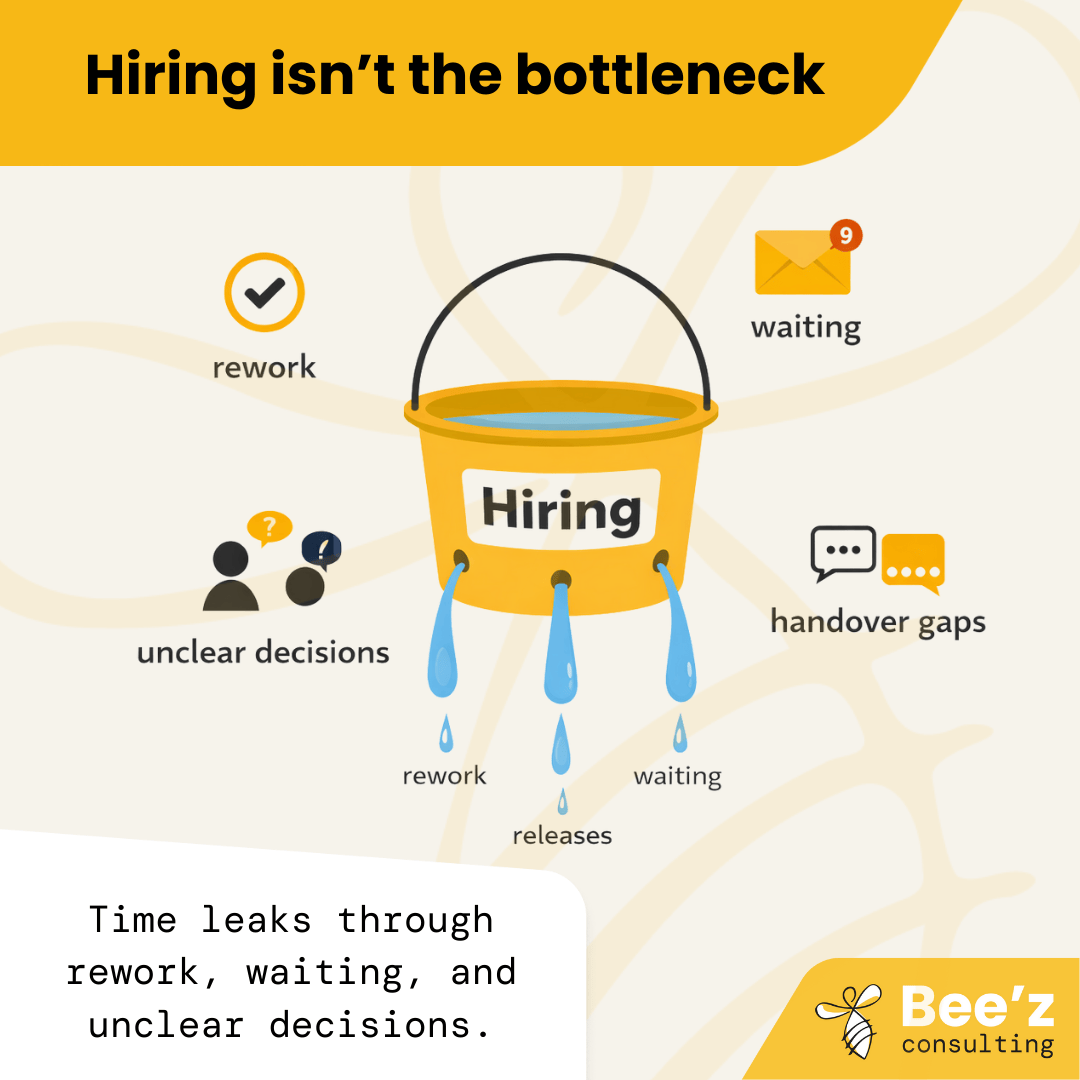
Appels, alertes, questions, changements de dernière minute : les professionnels passent sans cesse d’une tâche à l’autre.
À chaque changement, on perd en concentration. On perd du temps. On perd en sérénité.
Les erreurs se multiplient, le stress monte, et le risque de départs aussi.
C’est pour cela que Thrive dépasse la simple « gestion de processus ». Il touche à la qualité des soins et à l’énergie des équipes.
Pour passer à la pratique, nous avons conçu un guide court, à tester dans une unité ou sur un parcours patient.
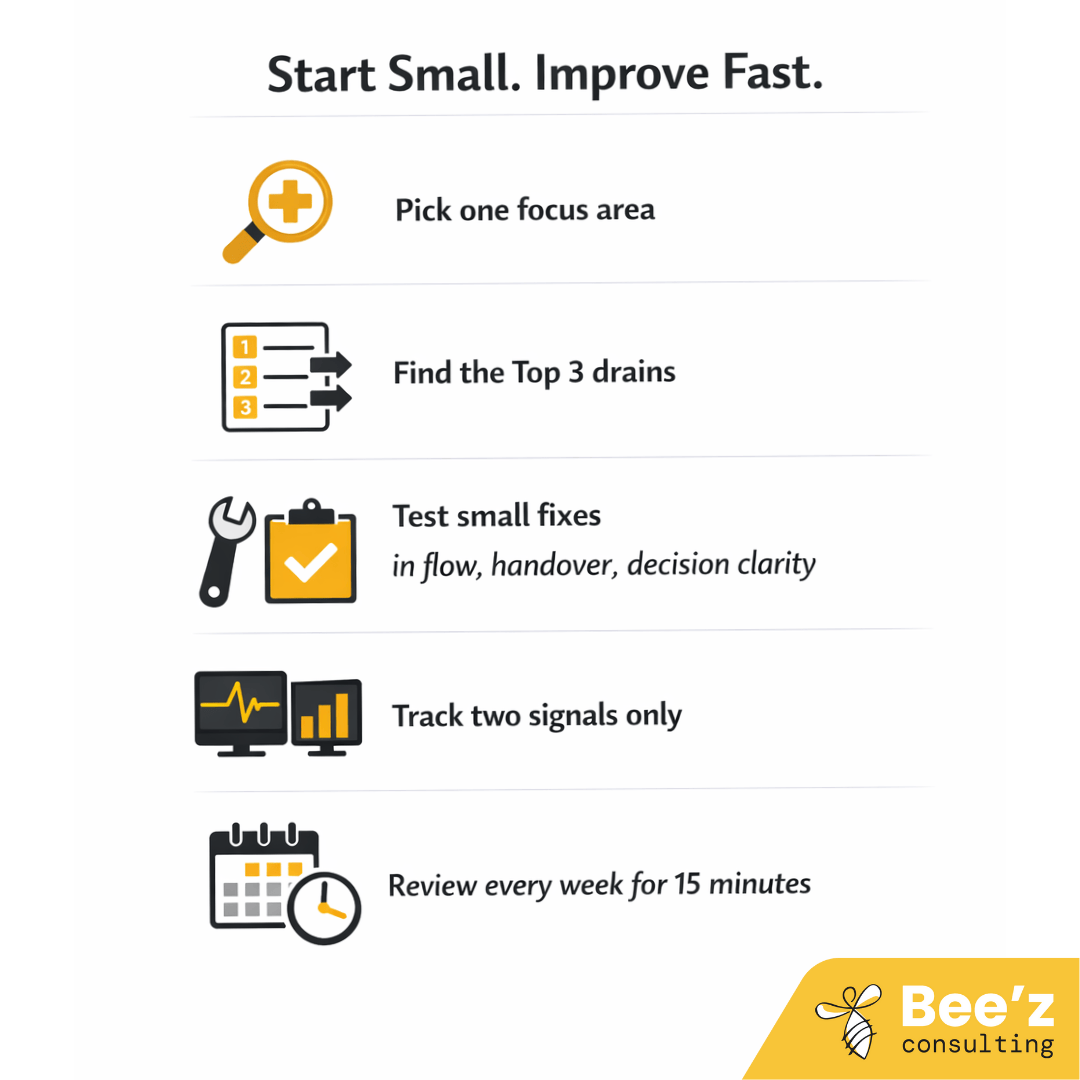
Il est volontairement léger. Il se teste en conditions réelles, avec des indicateurs simples. Ce n’est pas un programme de transformation complet.
Le guide suit six étapes :
Deux détails comptent plus qu’on ne le croit.
Vous cherchez des schémas qui se répètent, pas des coupables.
Gardez un périmètre restreint pour apprendre vite : une unité, un point de transfert ou un goulot d’étranglement qui revient.
Vous constaterez certains de ces résultats en quelques semaines, pas en quelques années :
Il y a aussi un effet que les dirigeants négligent souvent.
En supprimant les frictions, vous envoyez un message clair : « Nous respectons votre temps. Nous améliorons notre façon de travailler. Nous ne vous demandons pas juste de faire avec. »
Ce message renforce la confiance et aide à fidéliser les équipes. Il rend aussi vos efforts de recrutement plus rentables.
Ce guide convient bien aux frictions visibles et locales.
Mais si vous rencontrez l’une des situations suivantes, vous avancerez plus vite avec un accompagnement :
Téléchargez le Guide de démarrage Thrive et testez-le sur un périmètre précis.
Si vous voulez étendre la démarche, ou si le problème touche plusieurs équipes et services, nous pouvons vous aider à la structurer pour qu’elle tienne dans la durée. Prenez rendez-vous pour un premier échange.
.png)


Formation, recrutement, performance : quand les efforts ne produisent plus les capacités attendues, le référentiel de compétences est souvent en cause.

Le M&A hospitalier n'échoue pas au sommet. Voici ce que crée le vide de gouvernance et ce que font les dirigeants qui le voient.

Partout en Europe, les soins sortent de l'hôpital. Ce qui déterminera si ça tient : les règles du jeu à l'intérieur des réseaux, et la préparation des personnes. 3 clés opérationnelles.

