
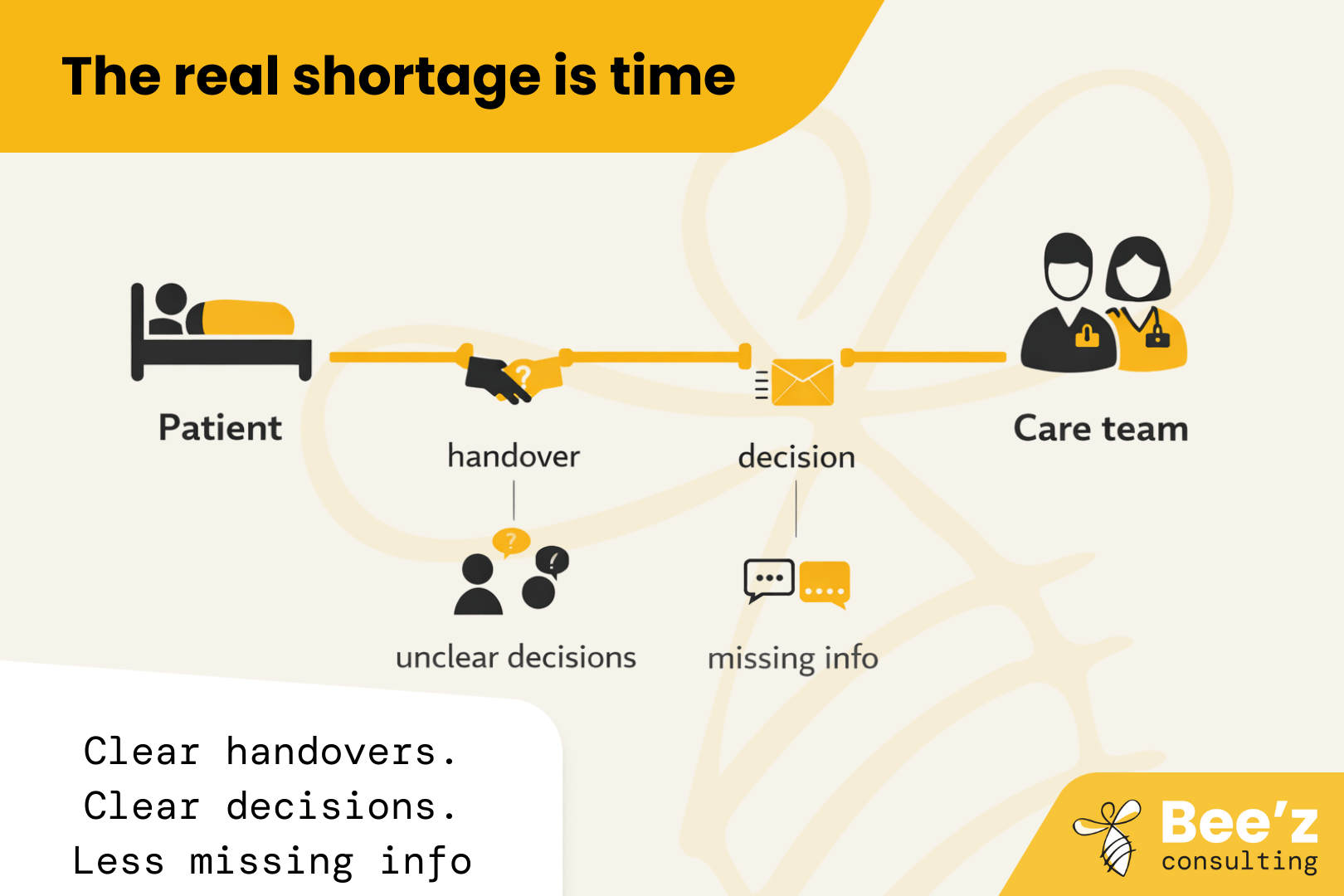
You can feel it in almost every hospital and clinic right now.
Vacancies stay open. Shifts are patched week by week. Managers fight fires. Teams do their best, yet the system still feels tight, tense, and fragile.
So the reflex is clear. “We need more people.”
Yes. Sometimes you do.
But here’s the part many leaders miss.
Even when you hire, you may not get the relief you expected. Because the constraint is not only headcount. It is how work moves, how decisions get made, and how much time gets lost to daily friction.
McKinsey Health Institute frames workforce action through three levers: Grow, Thrive, Stay. Grow is the pipeline. Stay is retention. Thrive is often treated as secondary. Yet Thrive is one of the fastest ways to create capacity, because it gives time back to care.
When pressure rises, leadership teams tend to focus on what they can count.
Those metrics matter. But they can hide a deeper issue.
If day-to-day work is messy, new hires land in chaos. They lose time, they lose energy, and they burn out faster.
Hiring into a broken flow is like pouring water into a bucket with holes.
Ask staff what drains them and you will not hear “lack of purpose.”
You will hear things like:
None of this is about motivation. It is about friction.
Friction is not neutral. It creates delays, rework, risk, and stress. It steals the most valuable resource in healthcare.
Time.
Thrive is not “do more with less.”
Thrive means making the system work better so staff can spend more time delivering quality care, with less rework and fewer avoidable delays.
In plain terms, Thrive looks like:
It sounds basic. It is. But basic is not easy.
These show up in large hospitals, small clinics, rehab settings, and care homes. Different scale, same pattern.
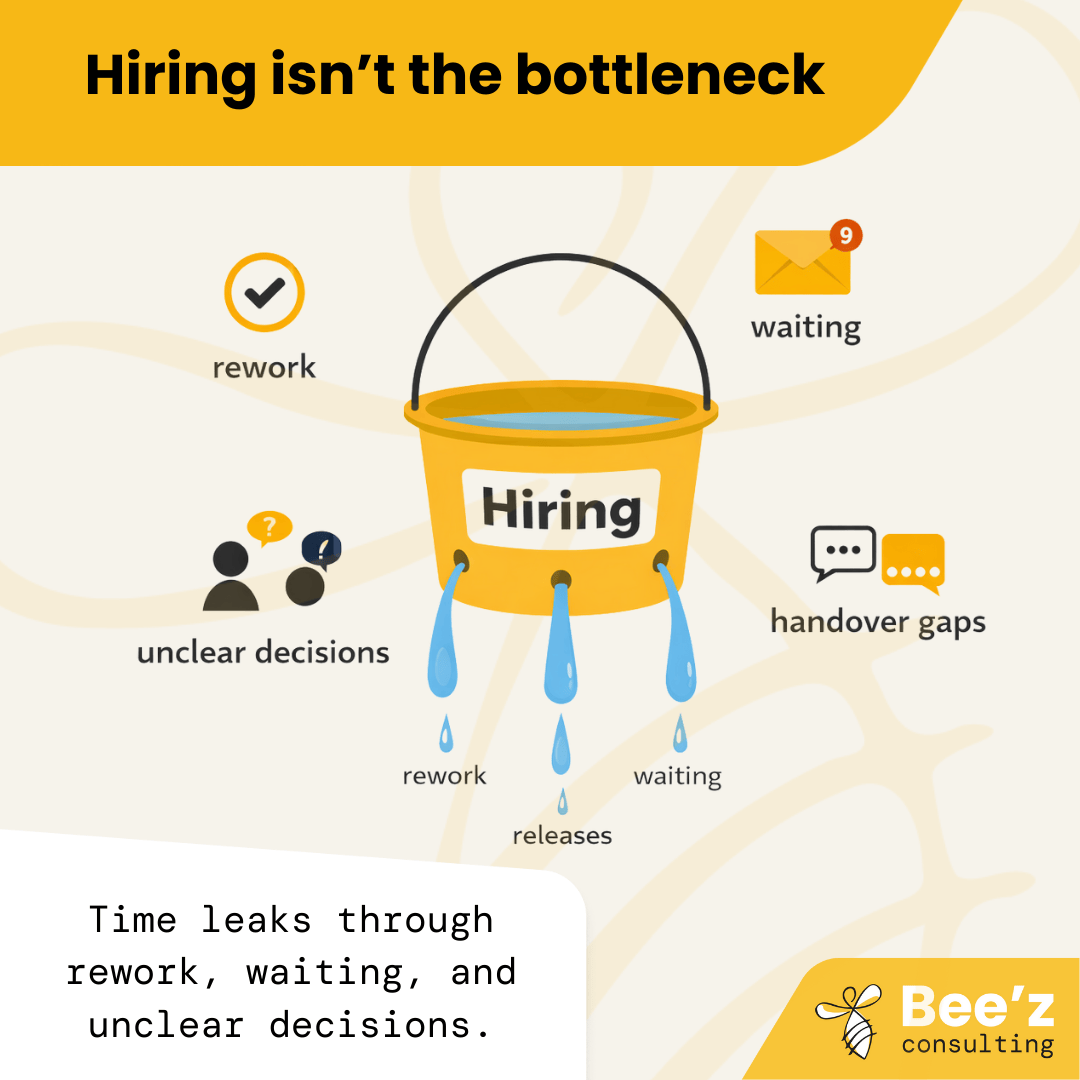
A patient moves units. The story gets thinner. A key detail sits in an inbox. A result is hard to find.
So people do what they must. They call, they hunt, they repeat checks, they document again.
This is not a people problem. It is a system problem.
When handovers are informal, quality depends on who is on shift and how busy the moment is.
That is fragile by design.
A strong handover is short, structured, and consistent. Not longer. Just clearer.
If teams do not know what they are allowed to decide, they escalate. Then they wait. Then the issue comes back bigger.
Over time, staff learn a painful lesson.
“It is safer to ask for approval than to own a decision.”
That slows everything down. It also drains pride.
New tools get added as patches. A form here. A spreadsheet there. A chat thread. A shared drive.
Each one makes sense on its own.
Together, they create a daily tax on attention.
Calls, alarms, questions, last-minute changes. People switch tasks constantly.
When you switch tasks, you lose focus. You lose time. You lose calm.
Then errors rise. Then stress rises. Then turnover risk rises.
This is why Thrive is not “process work.” It is care quality and energy protection.
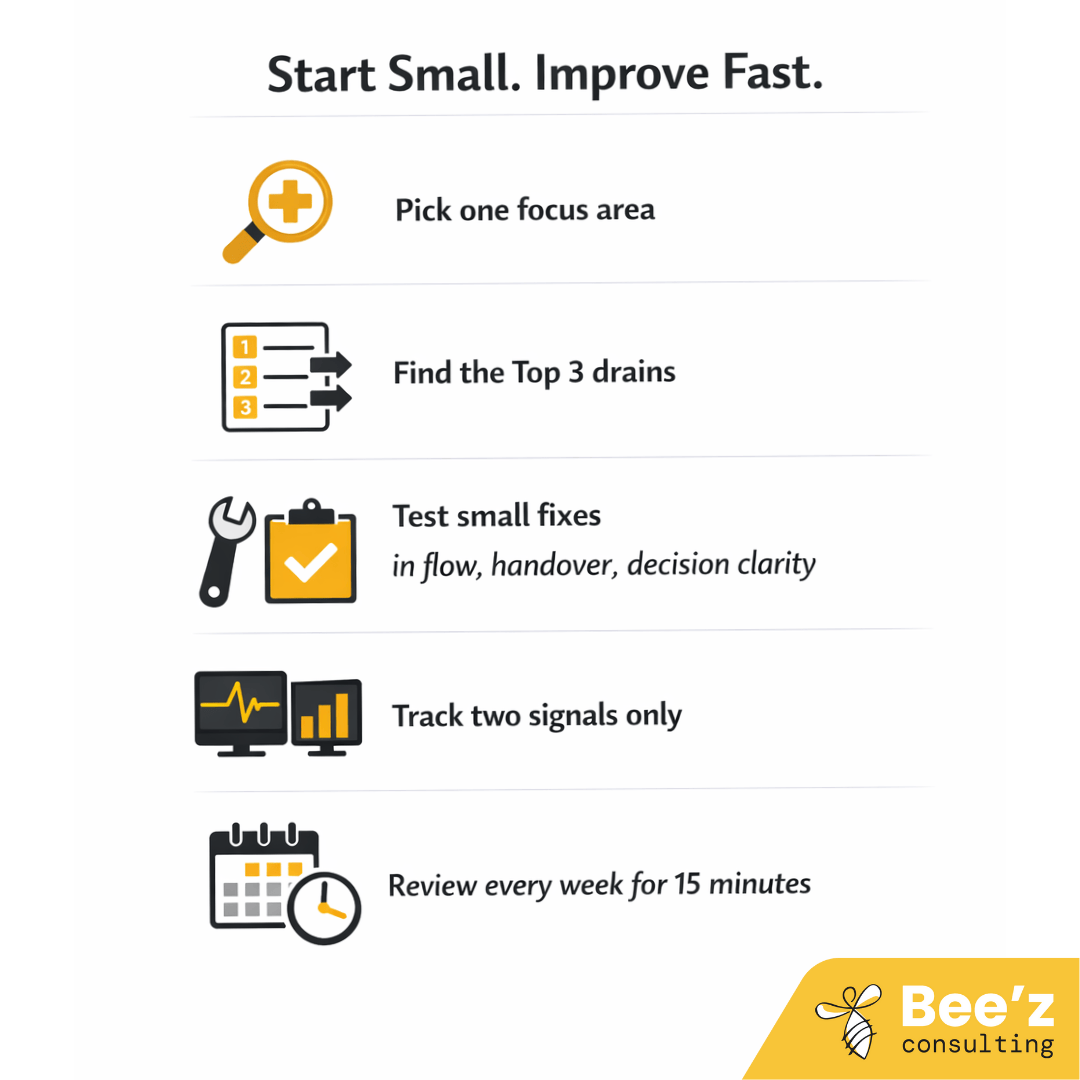
To make this usable, we created a short plabook that you can try in one unit or one patient flow.
It is intentionally light.
It is designed to be tested in real shifts, with simple signals. It is not a full transformation program.
The playbook walks you through six moves:
Two details matter more than people expect:
You will see some of these within weeks, not years:
There is also a side effect leaders often miss.
When you remove friction, you send a message.
“We respect your time. We fix the work. We do not just ask you to cope.”
That message builds trust. It supports retention. It also makes hiring effort pay off.
This starter playbook works well for visible, local friction.
But if you hit any of these, you will move faster with support:
Download the Thrive Starter Playbook and run it in one area.
If you want to scale, or if your issue crosses teams and units, we can help you set it up so it holds. Simply book a call with us and we can discuss how we can support you
.png)


Hospital M&A fails not at the top but in the middle layer. Here is what the governance vacuum looks like and what leaders who see it do differently.

Across Europe, care is moving out of hospitals. What will determine whether it works: the operating rules inside networks, and preparing the people who run them. 3 operational keys.

Healthcare handoffs break for three structural reasons. Ownership stops at the door. Authority never travels. The decision was never built to survive.

