

Ever walked into a room and felt the energy shift—like stepping into a pressure cooker?
Or maybe you’ve entered a space buzzing with motivation, where people actually want to be there?
That’s not magic. That’s emotional leadership in action.
And in healthcare, life sciences, and not-for-profits, where the stakes are high and burnout is real, leaders don’t just manage tasks—they set the emotional tone that determines success or failure.
At Bee’z Consulting, we specialize in helping mission-driven organizations develop leadership skills that inspire resilience, innovation, and collaboration. Because when leadership thrives, so does the mission.
Imagine a healthcare leader as a DJ at a party.
Their job? To curate the right emotional atmosphere.
But what’s on their playlist?
Why does this matter in healthcare? Because leadership isn't just about managing staff—it’s about influencing patient care, staff well-being, and organizational performance.
If you're looking to develop leadership in healthcare, emotional intelligence is a must-have skill. Leaders who understand their emotional impact can create a positive, high-performing workplace.
Here’s a fact backed by neuroscience: Emotions are contagious—especially from leadership.
A life sciences leader who radiates confidence and clarity inspires their team to think bigger.
But one who spreads stress? That anxiety trickles down, stifling innovation.
Research from Harvard Business Review confirms that emotionally intelligent leaders drive higher engagement and productivity.
In life sciences, where breakthroughs depend on collaboration, poor leadership can stall progress.
At Bee’z Consulting, we help leadership teams develop emotional intelligence so they can:
To transform life sciences leadership, resilient leaders don’t just react; they develop the mindset to thrive in uncertainty.
Emotional awareness isn’t optional—it’s a strategic advantage.
Ever been in a brainstorming session where every idea is shut down with, “That won’t work”?
Instant buzzkill.
Great leaders use a technique borrowed from improv comedy: the "Yes, and..." approach. Instead of shutting down ideas, they build on them:
This mindset shift is game-changing, especially in not-for-profits, where creative problem-solving is essential.
Yet, many organizations unintentionally stifle innovation by allowing fear of failure to dominate decision-making.
If your mission depends on bold ideas, leadership and teamwork must go hand in hand. Strong collaboration fuels innovation and helps teams turn challenges into opportunities.
Great leadership isn’t just about managing others—it starts with managing yourself first.
Self-aware leaders recognize their emotional impact and adjust accordingly.
That’s why at Bee’z Consulting, our leadership programs start with emotional intelligence training—helping leaders build awareness before they guide others.
The most effective leaders balance emotional intelligence with resilience , ensuring they lead with clarity even in unpredictable situations.
Here’s where it gets uncomfortable: Some leaders talk about inclusivity but don’t actually create inclusive spaces.
In healthcare, life sciences, and not-for-profits, where diverse perspectives lead to stronger solutions, inclusion isn’t just “nice to have.” It directly impacts performance, innovation, and trust.
At Bee’z Consulting, we work with leaders to move beyond performative inclusivity—helping them embed real inclusivity into leadership practices.
People repeat what gets recognized.
Smart leaders use this to reinforce positive emotional culture:
Whether you’re trying to transform healthcare leadership, develop leadership in life sciences, or strengthen leadership skills in not-for-profits, reinforcing the right behaviors is key to long-term success.
Many organizations don’t address leadership culture until burnout, disengagement, or turnover forces them to.
By then? It’s like trying to fix a leaky roof in a thunderstorm.
Great leaders take a proactive approach, regularly checking in on team dynamics, emotional culture, and engagement levels. Managing change effectively is part of that process, turning challenges into opportunities instead of crises.
Leadership isn’t just about strategy and execution. It’s about emotional influence.
At Bee’z Consulting, we help mission-driven organizations develop leadership skills in healthcare, life sciences, and not-for-profits—so they can build stronger teams, deliver greater impact, and create workplaces where people thrive.
👉 Want to explore how emotional leadership can transform your organization? Let’s talk.


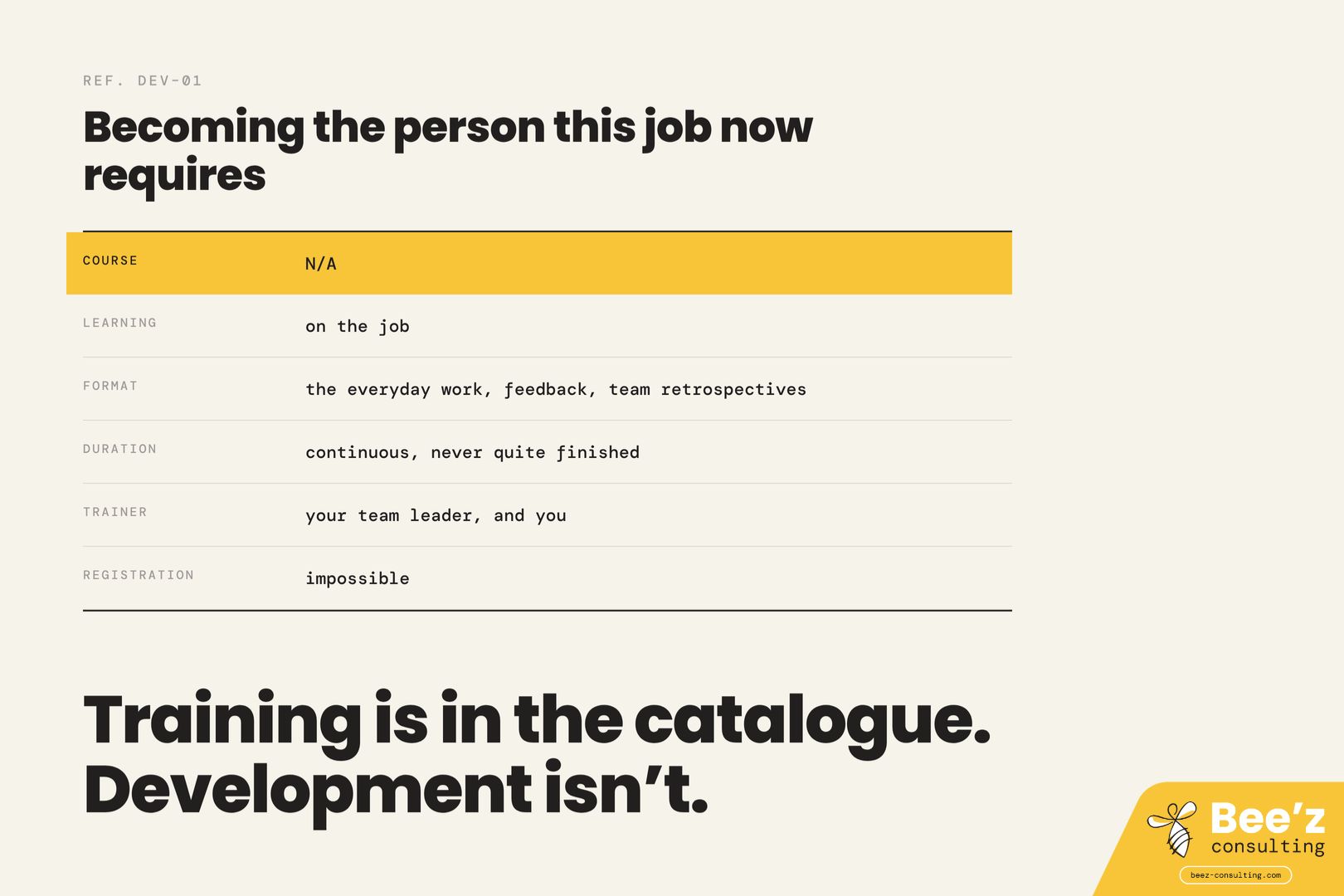
Development isn't decided once a year. What a development conversation contains, why it so rarely happens, and what actually builds capability at work.
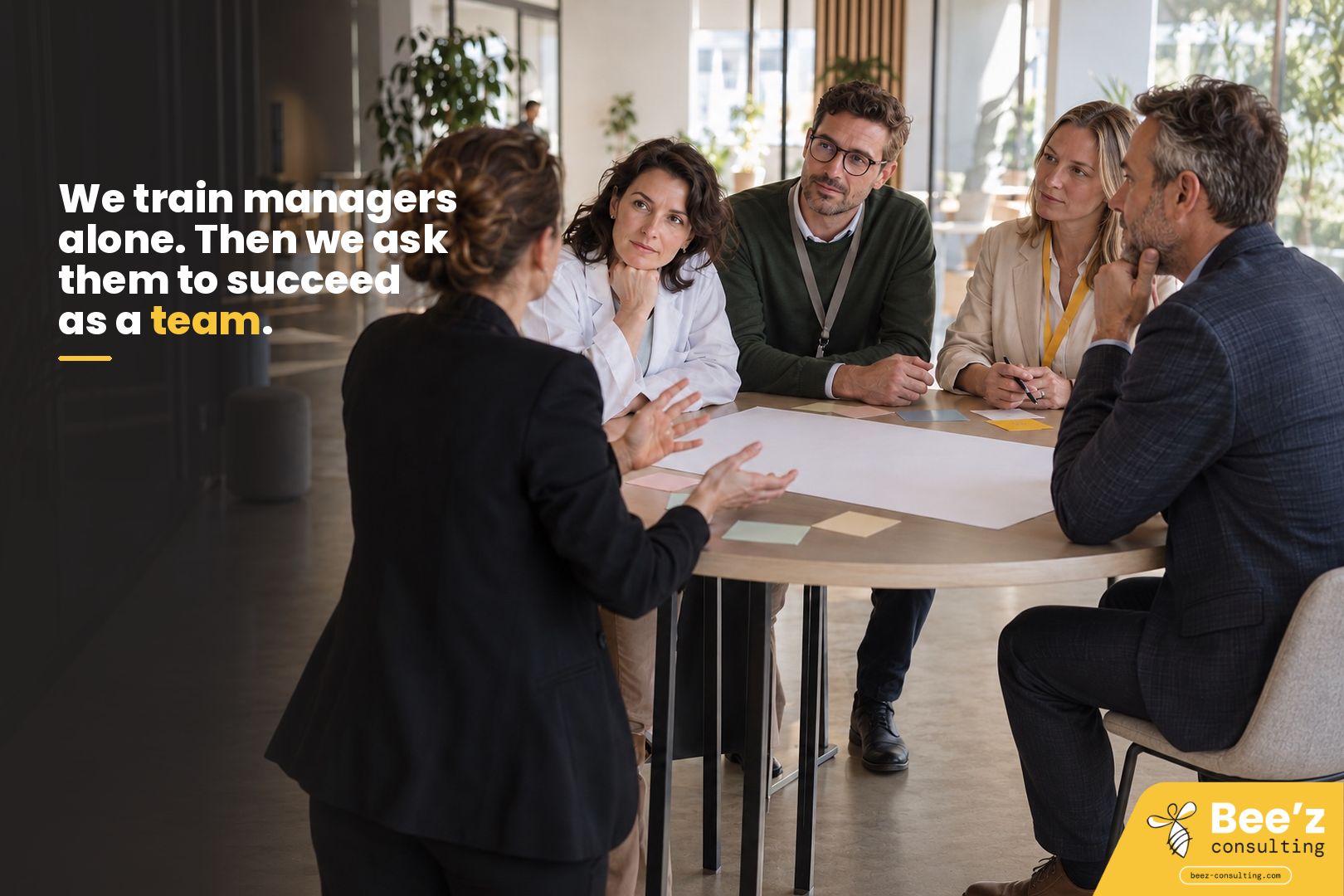
We train managers alone, then ask them to succeed as a team. What clinical simulation teaches management training, in every sector.
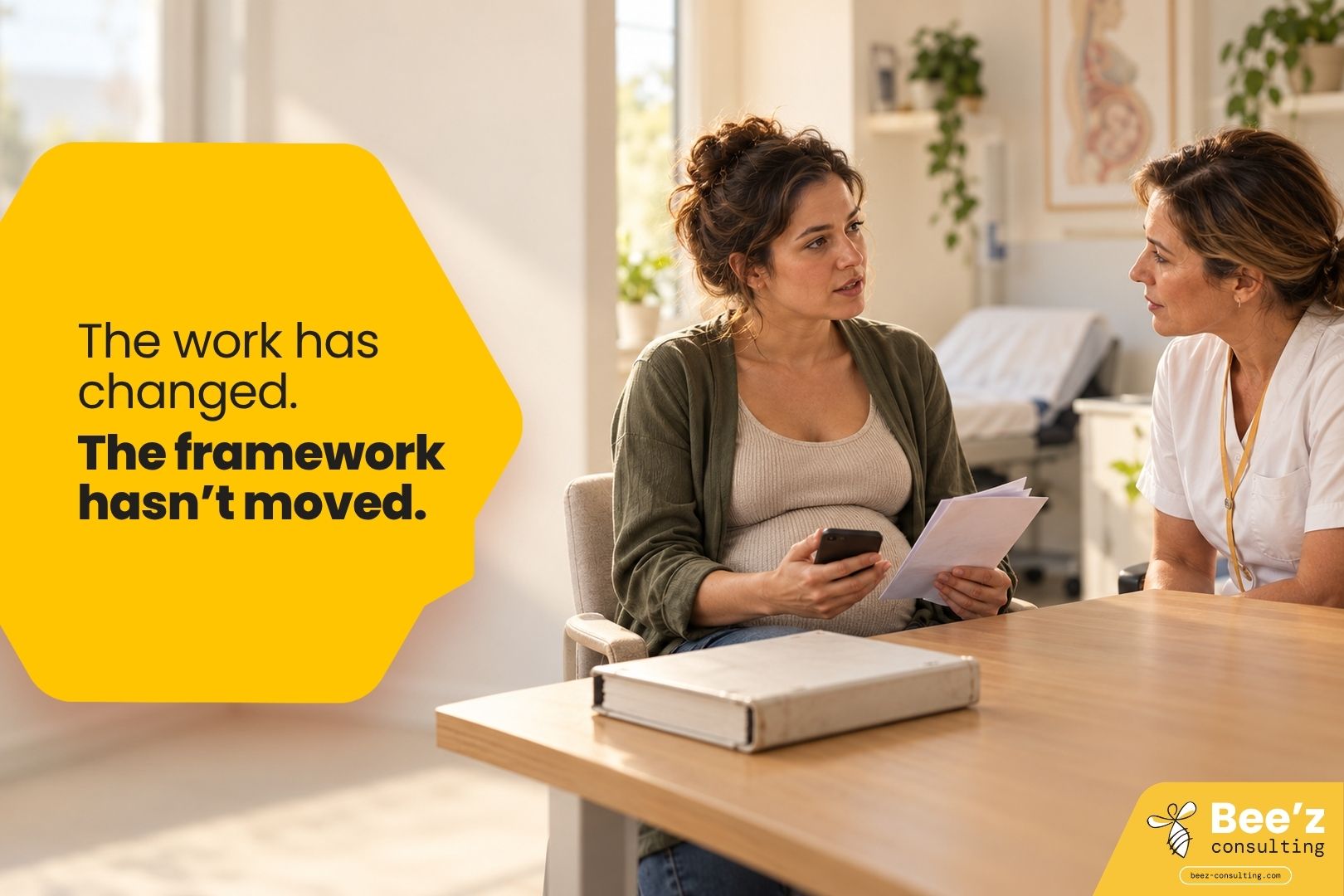
When development, recruitment and performance stop building the capabilities you need, your competency framework may be the cause. Three shifts, one test.

