

Dr. Sarah Chen, a first-generation immigrant with a background in both medicine and business administration, took the helm of Wellness Central Healthcare with a vision forged from personal experience.
Growing up in a underserved community, she witnessed firsthand the transformative power of accessible healthcare. This drove her passion for creating a healthcare system that truly served its community.
In the heart of the bustling healthcare center, Dr. Chen stood before her leadership team.
The air was thick with anticipation as she unveiled her vision for transforming their organization into a beacon of mission-led excellence.
"Our purpose," she declared, "is not just to treat illnesses, but to nurture wellness in our community. To achieve this, we must empower every member of our team to be a change enabler."

Dr. Chen's words marked the beginning of a remarkable journey that would redefine the essence of teamwork and propel the organization towards unprecedented growth.
This story of transformation isn't unique to healthcare; it resonates across industries where mission-led organizations strive to make a lasting impact.
At the core of every successful mission-led organization lies a compelling purpose that ignites passion and drives collective action. For C-level leaders and top management, harnessing this power is crucial for sustainable growth and meaningful impact.
To truly empower teams, leaders must ensure that every member understands and connects with the organization's mission. Here's how:
Dr. Chen implemented these strategies by organizing weekly "Mission Moments" where team members shared stories of how their work directly impacted patient lives.
This simple practice dramatically increased engagement and alignment across the organization.

In mission-led organizations, empowerment isn't just a buzzword—it's a fundamental principle that fuels growth and innovation.
Leaders can cultivate this culture by:
For example, Dr. Chen introduced a "Mission Innovation Fund" where any team member could propose and lead projects aligned with the organization's purpose. This initiative led to the development of a community health outreach program that significantly improved preventive care in underserved areas.
Read more: Mission-Driven Organizations : the importance of Leadership and Teamwork
In mission-led organizations, teamwork transcends traditional boundaries, becoming a powerful force for change enablement and growth.
To harness the full potential of teamwork, leaders must:
Dr. Chen's healthcare center saw remarkable results when they formed multidisciplinary teams to address complex patient needs.
This approach not only improved patient outcomes but also led to innovative care models that positioned the center as a leader in integrated healthcare delivery.
Autonomy is the fuel that powers high-performing teams in mission-led organizations.
Leaders can foster autonomy by:
When Dr. Chen empowered nursing teams to make real-time decisions about patient care protocols, it resulted in faster response times and improved patient satisfaction scores.

In the rapidly changing world of mission-led organizations, the ability to enable and embrace change is critical for sustained growth and impact.
To prepare teams for ongoing transformation, leaders should:
Dr. Chen's approach as she introduced new technologies in patient care serves as an excellent example: by involving staff in the selection and implementation process, she transformed potential resistance into enthusiastic adoption, leading to improved efficiency and patient care quality.
Read more: Change Management Strategies in Healthcare Organizations (Hospitals & Clinics)
Change enablement in mission-led organizations isn't just about keeping up; it's about leaping forward.
Leaders can achieve this by:
When Dr. Chen's healthcare center faced budget constraints, instead of making cuts, they used it as an opportunity to innovate. They developed a telemedicine program that not only reduced costs but also expanded their reach to rural communities, perfectly aligning with their mission of community wellness.

Read more: Transform Change into Opportunity: Why You Need a Change Management Specialist
For mission-led organizations, success isn't solely defined by financial metrics. True growth encompasses social impact, employee fulfillment, and mission advancement.
Leaders in mission-driven organizations should:
- Create balanced scorecards that include mission-related metrics
- Measure employee engagement and alignment with organizational purpose
- Track the broader societal impact of organizational initiatives
Dr. Chen's team developed a "Community Health Index" that measured not just patient outcomes but also community-wide health improvements. This comprehensive approach to measurement helped them secure additional funding and partnerships, fueling further growth.
To drive ongoing growth and impact, leaders must:
By instituting quarterly "Mission Check-ins," Dr. Chen created a forum where teams could assess their progress and realign their efforts with the organization's purpose, ensuring continuous growth and impact.
Organizations that fail to embrace mission-driven leadership risk becoming obsolete in an increasingly purpose-driven market.
They may face:
Conversely, organizations that successfully implement these principles gain:
For C-level leaders looking to transform their organizations into mission-led powerhouses, here's a step-by-step guide:
By following these steps, leaders can begin the journey towards a more empowered, mission-driven organization.

As Dr. Chen reflected on her organization's journey, she marveled at the transformation.
The healthcare center had not only achieved remarkable growth in patient numbers and community impact but had also become a place where every team member felt deeply connected to their purpose.
In mission-led organizations, whether in healthcare, education, technology, or any other sector, the principles of empowerment, teamwork, and change enablement are universal.
By embracing these principles, C-level leaders can unlock their organization's full potential, driving growth while making a meaningful impact on the world.
The journey of mission-driven leadership is ongoing, challenging, and immensely rewarding.
It requires courage, commitment, and a willingness to trust in the collective power of a purpose-aligned team. But for those who embark on this path, the rewards—in terms of organizational growth, employee fulfillment, and societal impact—are immeasurable.
As you consider your own leadership journey, ask yourself:
The answers to these questions may well be the key to unlocking unprecedented success and impact for your organization.
Remember, in the world of mission-led organizations, true leadership isn't about having all the answers—it's about empowering others to find them.
It's about creating an environment where purpose fuels passion, teamwork drives innovation, and every individual feels empowered to contribute to something greater than themselves.
That's the essence of mission-driven leadership, and it's the future of organizational success.


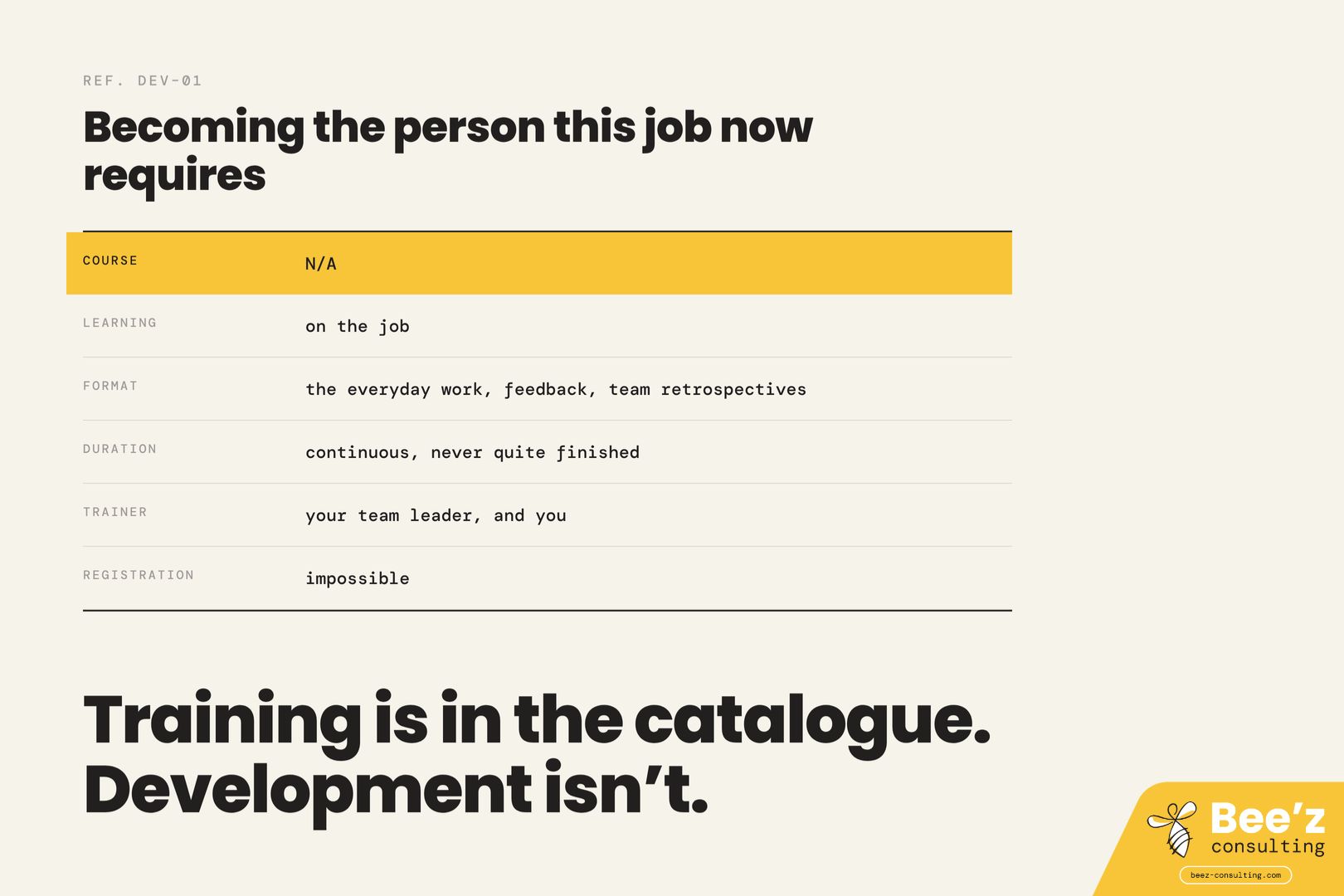
Development isn't decided once a year. What a development conversation contains, why it so rarely happens, and what actually builds capability at work.

We train managers alone, then ask them to succeed as a team. What clinical simulation teaches management training, in every sector.

When development, recruitment and performance stop building the capabilities you need, your competency framework may be the cause. Three shifts, one test.

