

This article explores the 7 best practices to adopt in order to improve patient care, while helping teams adapt to the constant evolution of the medical field. From continuous training to data analysis, discover the keys to optimal care management and better collaboration !
Respecting hygiene protocols is a crucial component of care quality. But this rigor goes beyond mere compliance ! It also involves ongoing change management.
For example, introducing new protocols or more effective disinfection technologies requires guiding staff through their adoption.
Change management becomes indispensable to ensure these protocols are consistently followed.
Staff, faced with new norms or methods, may encounter resistance, often due to fear of the unknown or lack of training. To ensure that each team member understands the necessity of these protocols, as well as their role in safeguarding patient safety and healthcare system efficiency, it is necessary to establish :

Following a vaccination schedule for staff is a key element in preventing infections in the medical field. It helps protect both vulnerable patients and healthcare providers from the spread of infectious diseases.
However, establishing or updating this schedule can be seen as a change, especially when new recommendations are issued or vaccination becomes mandatory for certain professions.
Staff compliance is achieved not only through obligation but also through active awareness and support throughout the process.
💬 Informing about the individual and collective benefits of vaccination,
❓ Addressing concerns,
💉 and ensuring easy access to vaccinations
Are essential elements for ensuring this change is accepted and followed.
Maximize Profitability & Performance
in your Healthcare Organization
PPE ensures the safety of both healthcare staff and patients.
These items aim to :
But, just like hygiene protocols and vaccination schedules, this practice also requires change management.
The introduction or update of PPE standards, such as mandatory use of specific equipment in certain contexts (e.g., masks, gloves, gowns, etc.), requires guidance.
Support throughout this process is essential :
are necessary for the adoption of these new rules to become second nature.
An environment that values this dynamic, with recognition of the key role of PPE in collective safety, helps accept and sustain this change.
Coordinating care ensures optimal patient management, especially in environments where multiple healthcare professionals are involved. Collaboration between doctors, nurses, aides, and other specialists should be as smooth as possible.
This coordination can sometimes be disrupted by changes in work organization, such as introducing new technologies or new protocols.
If teams are prepared and supported, care coordination will remain smooth.
📕 Also read : How to evaluate the performance of a healthcare service ?
Adopting a patient-centered approach means placing the patient at the heart of all decisions and actions related to their health, considering their needs, preferences, and values. This involves active listening, respecting the patient's autonomy, and collaborating closely with them throughout their care journey.
Implementing a patient-centered approach may disrupt well-established practices, such as strict role hierarchies or standardized care protocols.
Change management in this context aims to ensure that all staff adopt this new vision of care. When well-executed, this change leads to more personalized care and a better patient experience.
Healthcare institutions have access to an impressive amount of data (medical history, treatments, test results, etc.) which, when properly utilized, helps identify trends, personalize care, and optimize treatments.
However, integrating these data collection and analysis tools involves changes in the way staff work, and this is where effective change management becomes essential.
To help teams adapt to these new analysis software, training remains the main tool available.
The goal is to show your teams that data analysis is not just a technical task but one that directly improves the quality of care.
Promoting continuous staff training is crucial to maintaining a high level of competence and adaptability in such a dynamic field as healthcare. Medical knowledge evolves rapidly, new techniques emerge, and protocols are regularly updated.
You can support this dynamic with flexible training methods, such as :
so each team member can train at their own pace and according to their specific needs.
Training also strengthens team cohesion and leads to retaining top talents !
These practices, supported by well-executed change management, not only ensure the quality of care but also the engagement and satisfaction of staff.
In the healthcare sector, implementing best practices is essential to ensure quality care and the safety of both patients and staff. However, these practices cannot be effective without well-thought-out and adapted change management. ☝


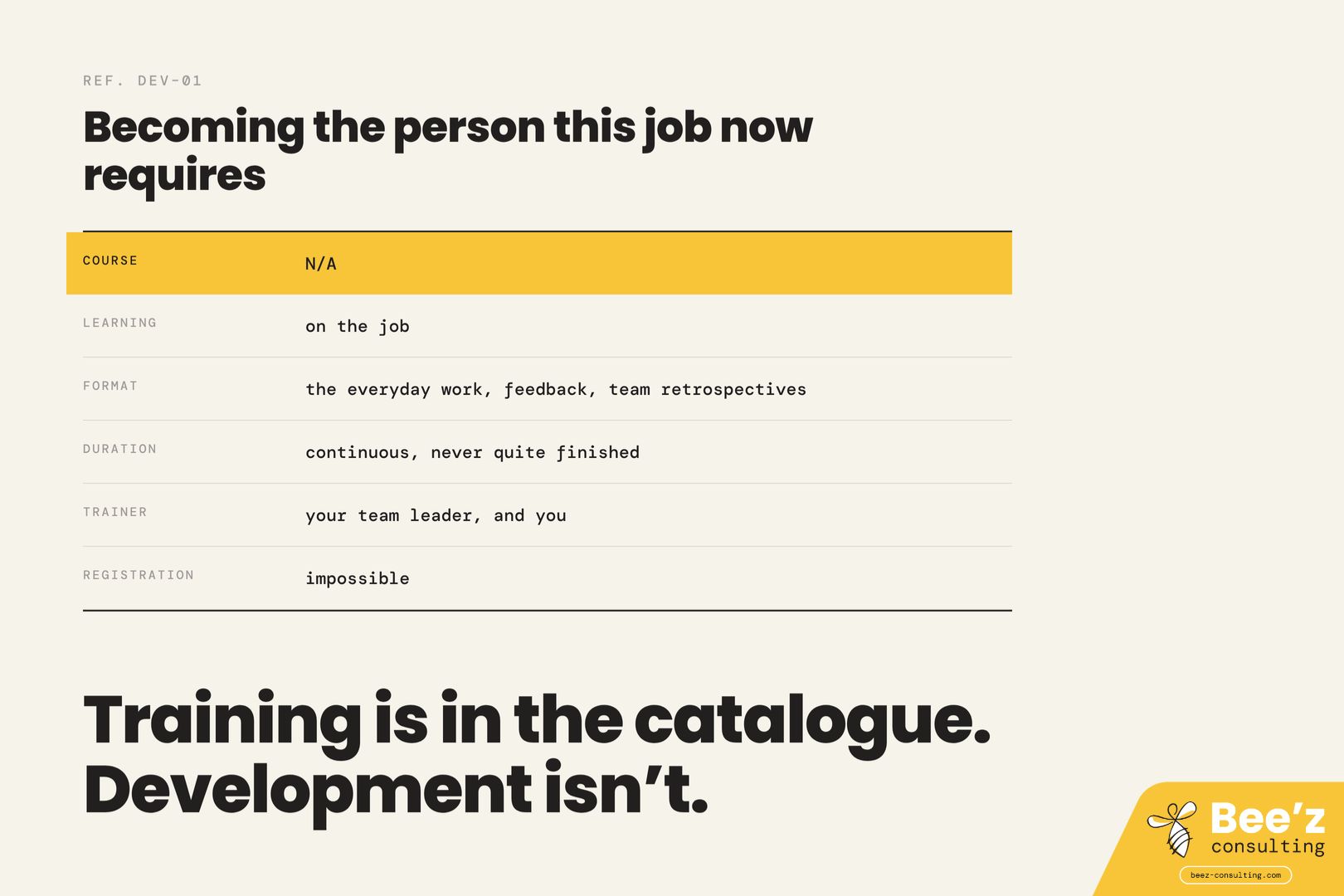
Development isn't decided once a year. What a development conversation contains, why it so rarely happens, and what actually builds capability at work.

We train managers alone, then ask them to succeed as a team. What clinical simulation teaches management training, in every sector.
When development, recruitment and performance stop building the capabilities you need, your competency framework may be the cause. Three shifts, one test.

