

Lazy thinking, or the art of idleness, is a concept poorly perceived in France, as well as in most other countries around the world. The pursuit of productivity is a dogma that employees must adhere to at all costs. Anyone who chooses to slow down risks paying a high price. 💼🚪
However, stepping back could bring personal as well as professional advantages.
Isn't it true that by rushing around constantly, one can lose sight of where they're headed ?
While some struggle to delegate or surround themselves with assistants, others expect these assistants to perform continuously. This double-edged strategy can lead an entire team straight into burnout ! 🤯
The concept might seem contrary to current trends. Yet lazy thinking aligns perfectly with boosting creativity and promoting a culture of innovation.
When minds overheat, errors multiply. Communication falters, making exchanges harder to assimilate and leading employees to misinterpretations.
The clichés surrounding lazy thinking are persistent and often misunderstood in the professional environment. Often perceived as an excuse to avoid work or a waste of time, this approach is actually a well-thought-out strategy to preserve employees' mental health and promote their overall well-being.
📍 Related topic :

☕ The coffee machine is no longer the only way to "boost" your employees' efficiency !
Some Western companies, understanding the importance of their teams' well-being and mindful of the impact on overall productivity, now ensure their teams are sufficiently rested by, for example, providing nap rooms.
Interestingly, this practice is more widely adopted today in Asian countries.
Another way to introduce and cultivate the concept of lazy thinking within your organization is through the creation of spaces for creative relaxation.
These spaces can be equipped with :
Spending time in these areas during work hours may seem bewildering to traditional managers. Yet, accepting a few hours of reduced productivity per week could prove to be a potentially profitable long-term calculation. Decompressing at work can stimulate the mind and help it gain perspective, a necessity in certain situations and phases of change.
"In the end, everyone benefits !"
The time spent on this "escape," often mistakenly labeled as "laziness," can be reinvested in the form of new ideas, innovative solutions... and better team cohesion.
Developing the concept of "lazy thinking" is not as straightforward, especially in sectors where it's less feasible. In fields like IT or research, for example, implementing this approach is easier due to favorable environments, missions, and schedules.
However, in industries like manufacturing or healthcare, where tasks require a certain rhythm and discipline in terms of schedules, it's challenging to pause for a refreshing nap... 😅
Is integrating relaxation periods without compromising production or overall efficiency possible ?
The current world of work is undergoing a revolution ! Lazy thinking is one of the changes reshaping workflows that have been in place for years.
For example : the four-day workweek is increasingly debated, despite potentially longer workdays. Not to mention Generation Z, who seeks more flexible working conditions, leading to multiple roles and freelance work, as well as greater availability to balance family life.
Companies able to adapt, reform their processes, and overcome apprehensions and prejudices will be the ones best positioned to retain talent and remain competitive in the coming years.
Need support from an expert team in change management ?
Bee’z Consulting is at your service ! 🐝


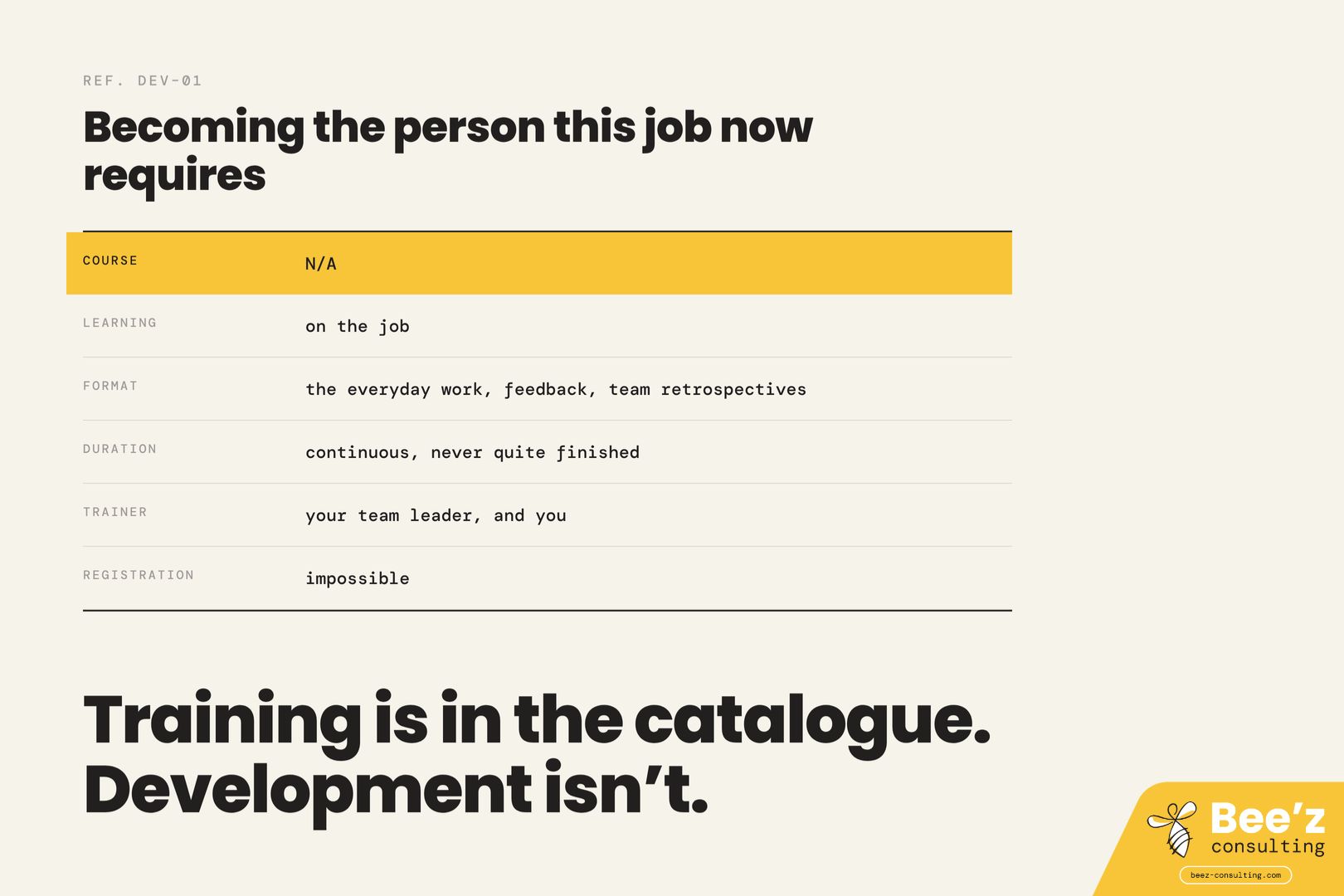
Development isn't decided once a year. What a development conversation contains, why it so rarely happens, and what actually builds capability at work.
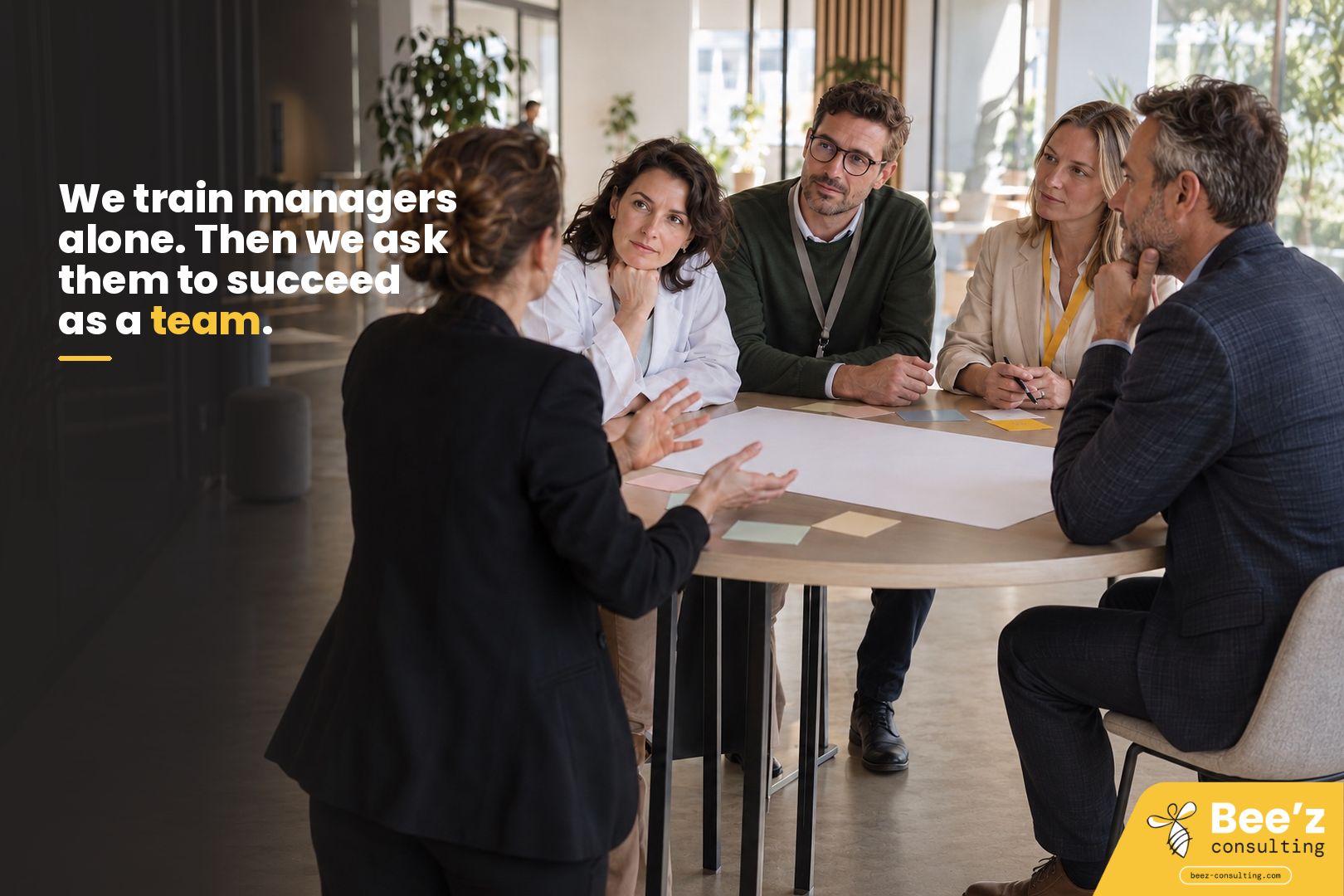
We train managers alone, then ask them to succeed as a team. What clinical simulation teaches management training, in every sector.
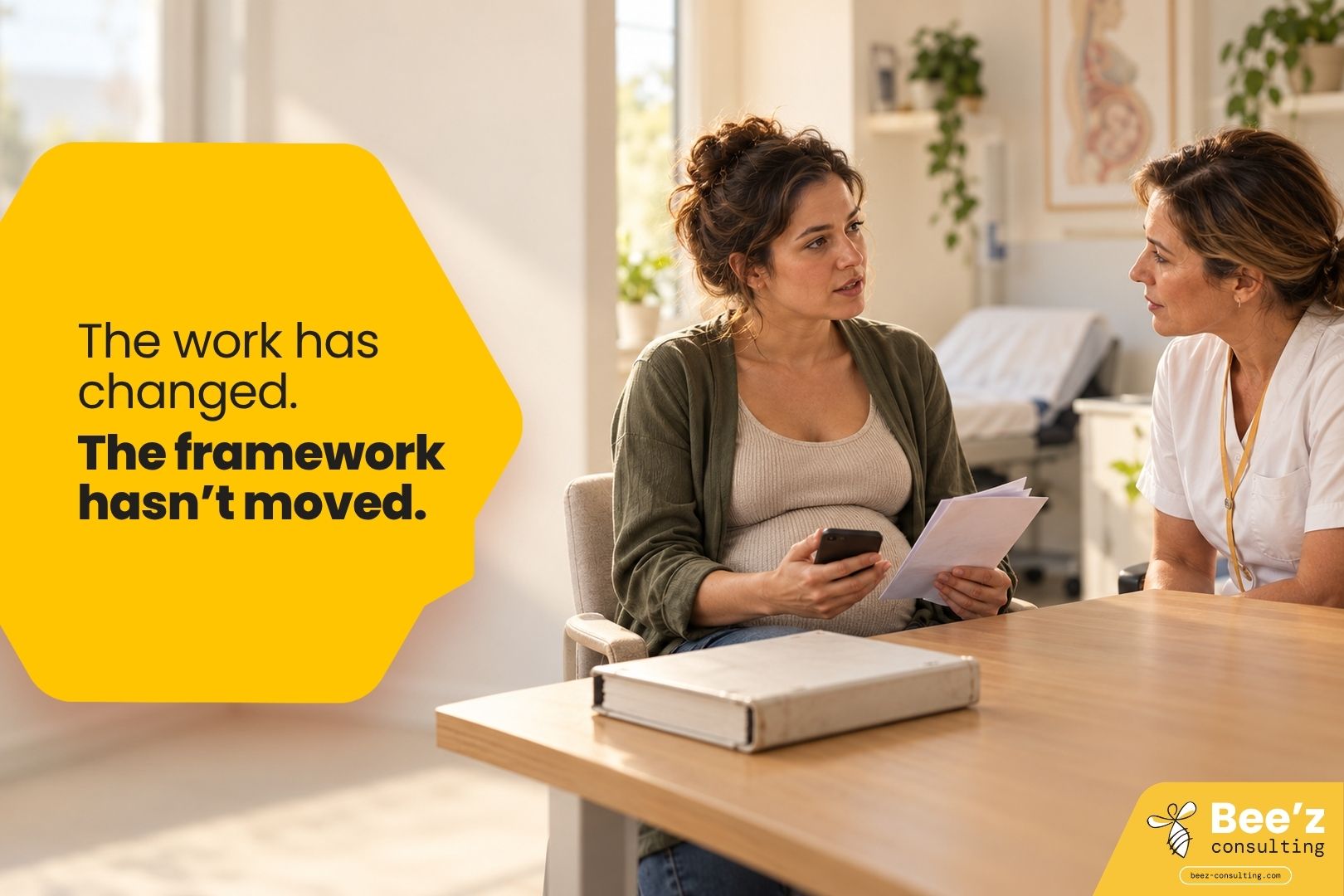
When development, recruitment and performance stop building the capabilities you need, your competency framework may be the cause. Three shifts, one test.

