

For decades, leadership in the corporate world has followed a model built by and for men. Long hours, top-down command, sharp elbows, and rigid expectations. But as the business world evolves, so does our definition of what it means to lead. And women are at the forefront of that evolution.
Despite representing nearly 50% of the workforce, women still occupy less than 10% of executive roles globally. The reasons are complex: outdated societal norms, unconscious bias, rigid corporate structures—and, crucially, the pervasive belief that leadership must look and sound a certain way.
But what if the future of leadership doesn’t mean women fitting into the mold, but rather breaking it entirely?
The "glass ceiling" metaphor is well known. But today, many women are handed the reins during times of crisis, only to find themselves on a "glass cliff": set up to fail.
This tells us something important. It's not that women can't lead—it's that the structures they're navigating weren't built with them in mind.
To change the outcome, we need to change the game.
Traditional leadership rewards assertiveness, decisiveness, and visibility—traits historically coded as masculine. But research from Harvard Business Review and McKinsey shows that the most effective leaders today also embody empathy, adaptability, collaboration, and transparency. In other words, qualities long associated with female leadership.
Women don’t need to lead like men to succeed. In fact, they shouldn’t.
In today’s complex business environment, the ability to connect, communicate, and co-create is more valuable than ever. Here’s what studies consistently show women leaders excel at:
These are not "soft" skills. They are power skills. And they directly impact performance, retention, and growth.
Organizations with gender-diverse leadership teams outperform their peers on profitability, innovation, and engagement. McKinsey's data is clear: companies in the top quartile for gender diversity on executive teams are 25% more likely to have above-average profitability.
At Bee'z Consulting, we see it every day: when women are empowered to lead authentically, companies evolve faster, adapt better, and grow stronger.
To accelerate change, organizations must address both mindset and structure:
Advancing women in leadership isn’t just a gender issue. It’s a business imperative. And it’s everyone’s job.
The future of leadership is inclusive, dynamic, and values-driven. It rewards results, yes—but also relationships, resilience, and relevance.
Let’s stop asking women to lean in harder. Let’s redesign the table.
At Bee'z Consulting, we help organizations build inclusive, high-performing leadership cultures. Whether you're looking to develop your leadership pipeline, unlock your next generation of talent, or redefine what leadership means for your organization—we're here to help.


Change management in healthcare: the 2025-2026 reports list every lever. None says who translates the strategy in the units, or how to prepare them.

Agile in healthcare works when teams, not tools, change. What agile really means for hospitals, why implementation stalls, and 6 practical steps.
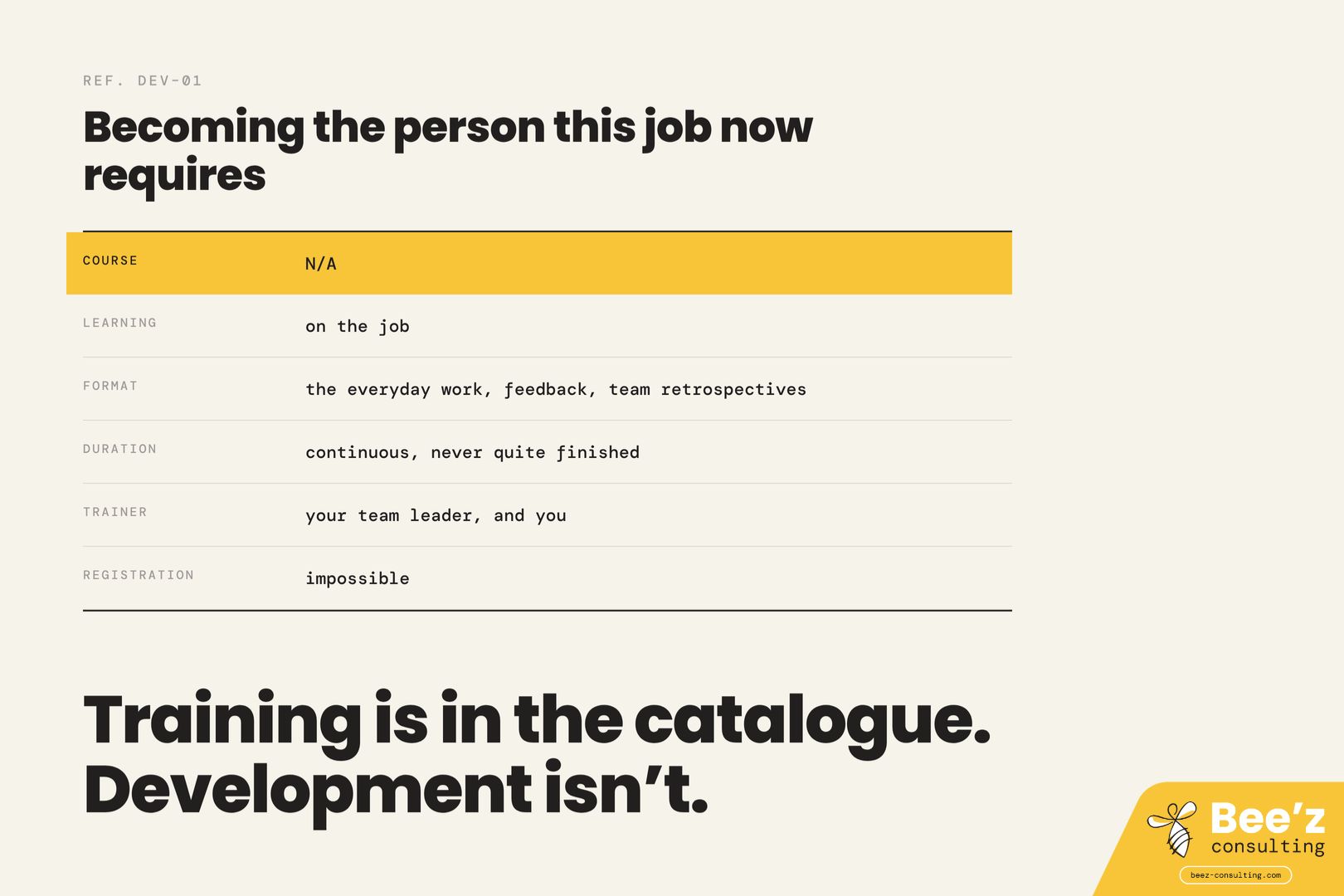
Development isn't decided once a year. What a development conversation contains, why it so rarely happens, and what actually builds capability at work.

