

Becoming a digital leader isn’t easy—or fast.
It requires a full-scale organizational transformation involving time, persistence, and a well-executed change management strategy.
Digital transformation goes beyond tools and technology. It changes what people do every day.
It also reshapes how they behave and interact—with each other and with external stakeholders. To truly evolve, organizations must embed new values, shift mindsets, and cultivate a culture that defines how things get done in this new environment.
Organizational change is never simple.
But research from Boston Consulting Group (BCG) shows that companies prioritizing cultural factors during transformations achieve 5x better outcomes and significantly stronger financial performance than those that don’t.
Digital-native companies have a clear advantage when it comes to talent attraction—especially among younger generations. Why?
Generations Z and Y are drawn to digital environments that foster creativity, collaboration, and autonomy. These companies are often more agile and flexible in structure. They empower employees to take smart risks, promote continuous learning, and offer dynamic career development paths.
Simply put, digital players win hearts and minds by creating spaces where employees can thrive and grow.
Would your organization benefit from adopting some of the characteristics that define digital leaders?
Are you ready to transform your structure and culture to unlock breakthrough financial performance and create a truly engaged workforce?
At Bee’z Consulting, we specialize in organizational transformation and change management.
We help mid-sized businesses shift toward a collaborative, agile culture that drives sustainable growth.
👉 Click the button below to schedule a consultation. Together, we’ll evaluate your current landscape and define a customized set of actions to support your transformation.
Contact Bee’z Consulting
.png)


Hospital M&A fails not at the top but in the middle layer. Here is what the governance vacuum looks like and what leaders who see it do differently.
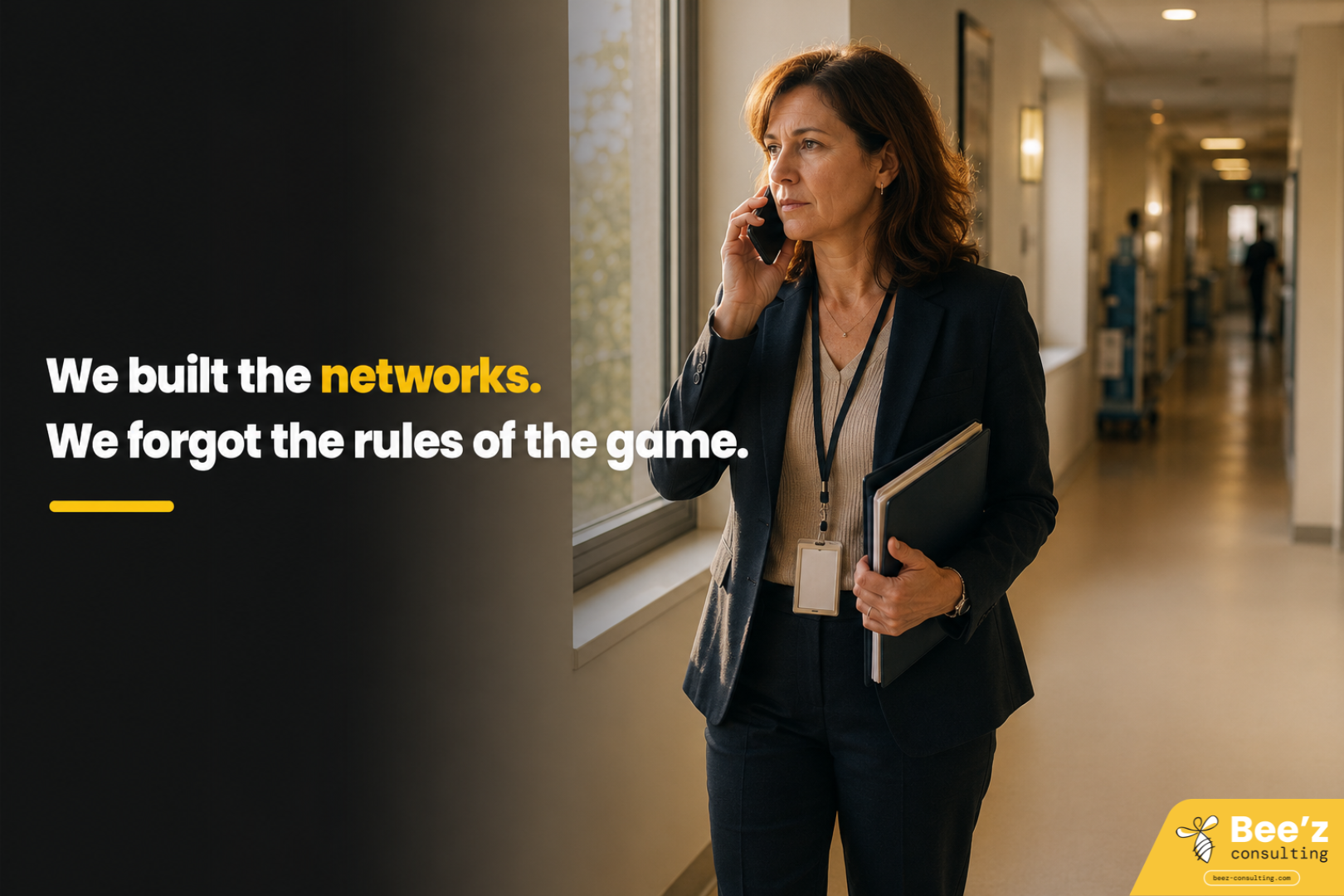
Across Europe, care is moving out of hospitals. What will determine whether it works: the operating rules inside networks, and preparing the people who run them. 3 operational keys.

Healthcare handoffs break for three structural reasons. Ownership stops at the door. Authority never travels. The decision was never built to survive.

