

A new electronic patient record goes live on a Monday. The software works. Three weeks later, half the ward is still printing the old forms, and the other half has found workarounds nobody signed off.
The tool was installed. The skills to use it were never built.
That gap is what upskilling is meant to close. The term is now used everywhere, often loosely, and often interchangeably with reskilling or cross-skilling. They are not the same thing, and the difference matters when you decide where to put a training budget.
The pressure is real. According to the World Economic Forum's Future of Jobs Report 2025, workers can expect 39% of their core skills to be transformed or become outdated between 2025 and 2030. Out of every 100 workers, 59 will need training by 2030, and 85% of employers surveyed say upskilling their workforce is a priority.
In this article, we define each approach, show where each one fits, and walk through how a private hospital used upskilling to cut its infection rate.
Here is the short version of the upskilling and reskilling definition, with cross-skilling alongside, since the three are often confused.
Upskilling deepens the skills someone already uses in their current role. A nurse learns to use a new monitoring system. A unit head learns to run a performance conversation. The job stays the same; the way it is done improves.
Reskilling prepares someone for a different role. It happens when a function changes so much, or disappears, that people need new skills to stay employed in the organisation.
Cross-skilling adds complementary skills next to someone's specialty. The person keeps their role but can contribute in neighbouring areas.
In practice:
Skills now age faster than job descriptions. New tools, new regulations, new care pathways and now AI change what a role requires, often without changing its title.
In healthcare, the effect is especially visible. Electronic records, remote monitoring, ambulatory care and new quality standards all ask existing teams to work differently, usually while the service keeps running.
AI adds a new layer. The same WEF report expects AI and big data to be the fastest-growing skills to 2030, while leadership and social influence remain among the core skills employers consider essential. Technical and human skills now have to grow together.
Hiring is rarely the answer. Recruitment is slow and costly, and new staff arrive into the same systems with the same gaps. Developing the people already in place is often the fastest route to the capabilities you need.
There is a second reason. People stay where they can grow. Staff who see a real path to develop their expertise feel more valued and are more likely to stay, which matters in a sector short of nurses and physicians.
One condition makes the difference: involve employees in the choices. When people help decide what they learn and how, they engage with the training rather than sit through it.
Upskilling can take several forms:
The last form is often underused. In hospitals, simulation is already standard for clinical emergencies. The same approach works for managerial situations: a difficult conversation, a conflict between two units, a handover under pressure.
The goal is always the same: keep people's expertise aligned with how their work is actually changing.

In hospitals and clinics, the most pressing gaps tend to cluster in four areas:
The first three are visible and usually budgeted. The fourth is less visible, yet it is where many adverse events start. A skill gap between teams is still a skill gap, even if no single job description shows it.
For employers, upskilling:
For employees, it:
Cross-skilling takes a more versatile approach. Rather than going deeper into one area, it trains people in complementary skills, often in fields next to their specialty.
A project manager might develop skills in data analysis or communication to work better with different teams. In a hospital, nurses trained to work in two neighbouring units can cover absences without the service falling back on temporary staff.
Cross-skilling makes teams more flexible and better able to support each other, especially when absences or peaks in activity hit.
Reskilling has a transformative aim. It trains people for new jobs or different roles, usually when some functions become obsolete.
In a company adopting automation, operators might be trained to maintain the robots that replace part of their former tasks. In a hospital, administrative staff whose tasks are being automated might move into patient coordination roles.
Reskilling keeps knowledge of the organisation in-house and avoids recruiting people who would need training anyway. It also sends a strong signal to teams: change does not have to mean exclusion.
Most upskilling budgets go to technical skills. Yet in many organisations, the most urgent gap sits elsewhere.
Unit heads, team leads and nurse managers are often promoted for their technical or clinical expertise. Few are prepared for the leadership part of the job: giving feedback, running a team meeting that leads to decisions, handling conflict, carrying a change they did not design.
Leadership development is upskilling too, and often the kind with the widest effect. A manager who learns to coach changes the daily experience of an entire team. Leadership effectiveness grows the same way technical skills do: through practice on real situations, feedback and follow-up, rather than a one-off seminar.
For senior leaders, executive coaching plays a similar role. It gives a clinical director or a hospital executive a space to work on the situations that matter most in their role, close to the real decisions.
A useful test for any leadership programme: three months later, can each participant name one decision they now take differently, and one conversation they no longer avoid? If they cannot, the programme added knowledge without building capability.
Read also: Your competency framework was built for work that no longer exists and We train managers alone. Then we ask them to succeed as a team.
Many organisations invest in training and see little change on the floor. The reason is rarely the quality of the course.
People learn a new method, then go back to the same rotas, the same pressure and a manager who was not in the room. On the Tuesday after the training, the old habits return, because nothing around the person has changed.
Skills become practice only when the work around them changes too. In our experience, three conditions make the difference:
Training builds the skill. The organisation decides whether it is used.
An effective upskilling programme needs planning and a clear structure, especially when it supports a wider change.
Start by mapping your teams' current skills against what the work now requires. A skills audit, combined with direct observation and conversations with managers and frontline staff, shows the real gaps and the strengths you can build on.
Objectives should be specific enough to measure. If the goal is to train administrative teams on new medical records software, define indicators such as:
These indicators tell you whether the training works before you roll it out more widely.
Once needs and objectives are clear, choose the formats that fit: individual training, workshops, simulation, coaching or a combination.
An external change management consultant can speed up this step. They bring a fresh perspective, help identify resistance to change, and design learning that sticks in daily practice rather than staying in the training room.
Regular follow-up lets you adjust the programme as you go. Build feedback into the process: what is being used, what is not, and why.
Monitoring also motivates teams, because people see their own progress more clearly.
Here is how Bee'z Consulting helped a private hospital upskill its middle managers and functional teams to reduce healthcare-associated infections.
The case shows how a targeted programme can serve a precise organisational goal: improving patient safety by building a culture of proactive infection control.
We started by reviewing the hospital's infection control protocols, its current infection rates and the skills of the staff involved.
To get a true picture, our consultants walked through real cases and spoke directly with team leaders and frontline staff. This showed where communication and workflow were contributing to the spread of infections.
Clinical staff knew the hygiene basics. Middle managers lacked the skills to reinforce and monitor them. We also found breakdowns in communication between departments, which caused lapses in infection control measures.
With the hospital's leadership, we set three objectives:
Defining these targets from the start kept the programme focused on actions that would directly reduce infections.
The programme moved in three phases, so that managers could build new skills gradually and apply each one before moving on.
Phase 1, leadership foundations. Managers worked on active listening and constructive feedback, the skills they needed to reinforce infection control practices with their teams. This built more trust between managers and staff.
Phase 2, collaborative process improvement. Managers reviewed infection control processes together, identified what to improve and redesigned the processes as a group. They also learned to gather ideas from their teams and hold open discussions about infection control goals.
Phase 3, rapid response and coordination. Managers practised realistic scenarios to coordinate across departments during an outbreak, so they could act quickly when it mattered most.
After the training, we helped the hospital set up a simple monitoring system. Managers received monthly feedback on how their teams were applying the updated practices, and infection rates were tracked closely.
We also helped the hospital collect regular feedback from staff and patients. Managers could learn from frontline experience and make small adjustments as needed.
Three choices explain most of the result:
Within six months, compliance with infection control measures had increased and infection rates had started to fall.
By the end of the year, the hospital had reduced its infection rate by 30%, beyond the original 25% target.
Infection control became a shared priority across the hospital, led by managers who now had the skills to carry it.
The protocols had been there all along. What changed was the ability of managers to make them live.
Upskilling, cross-skilling and reskilling answer different needs, and most organisations need all three at different moments. The question is which one your teams need now.
Which skill gap is costing your teams the most today: the technical one everyone sees, or the managerial one nobody budgets for?
Let's talk: https://www.beez-consulting.com/contact
Upskilling means developing the skills people already use in their current role so they can meet its changing demands. A nurse learning a new monitoring system or a unit head learning to run performance conversations are both examples. The job stays the same, but the way it is done improves. Upskilling is usually faster and cheaper than recruiting for the same capabilities.
Upskilling deepens skills within a current role, while reskilling prepares someone for a different role. Organisations upskill when a job evolves, for example with a new tool or protocol. They reskill when a function changes so much, or disappears, that people need new skills to stay employed. Both keep knowledge of the organisation in-house rather than relying on external hiring.
Cross-skilling adds complementary skills alongside someone's specialty, without changing their role. A project manager might learn data analysis, or a nurse might be trained to work in a neighbouring unit. The aim is flexibility: teams that can support each other during absences or peaks in activity, and people who understand the work around their own.
Skills are changing faster than job titles. The World Economic Forum's Future of Jobs Report 2025 estimates that 39% of workers' core skills will be transformed or become outdated by 2030, and that 59 out of 100 workers will need training. Upskilling helps organisations keep pace without relying only on recruitment, and it improves retention because people see a path to grow.
Most effective programmes follow four steps. First, assess current skills against what the work now requires. Second, set clear, measurable objectives, such as adoption rates or error reduction. Third, choose formats that fit, from workshops to simulation or coaching. Fourth, monitor progress and adjust. Involving employees in the choices throughout makes them far more likely to apply what they learn.
Measure what changes in the work, not only attendance. Useful indicators include the time needed to master a new tool, adoption rates across teams, error rates and the outcomes the training was meant to improve, such as infection rates or patient waiting times. Following these indicators over several months shows whether new skills have become daily practice.
Yes, and often the one with the widest effect. Many managers are promoted for their technical or clinical expertise, with little preparation for leading people. Developing their ability to give feedback, run decision-making meetings and carry change improves the daily experience of whole teams. Leadership skills grow through practice on real situations and follow-up, more than through one-off seminars.
Executive coaching gives senior leaders, such as clinical directors or hospital executives, a structured space to work on the situations that matter most in their role: difficult decisions, stakeholder tensions, leading change. Unlike general training, it starts from the leader's real context. In healthcare, it often complements team-based programmes so that senior and middle management develop in the same direction.
Upskilling often fails when training happens away from the work and nothing changes on return. People learn a new method, then go back to the same rotas, the same pressure and managers who were not involved. Programmes work better when managers take part, when objectives are tied to real outcomes and when there is follow-up in the weeks after the training.
Hospitals can favour short formats close to the work: simulation sessions, workshops built around real cases, coaching during shifts and peer learning at handover. Training managers first often has the widest effect, because they then support their own teams. Spreading the programme over several months, with clear objectives, lets services keep running while new practices settle in.


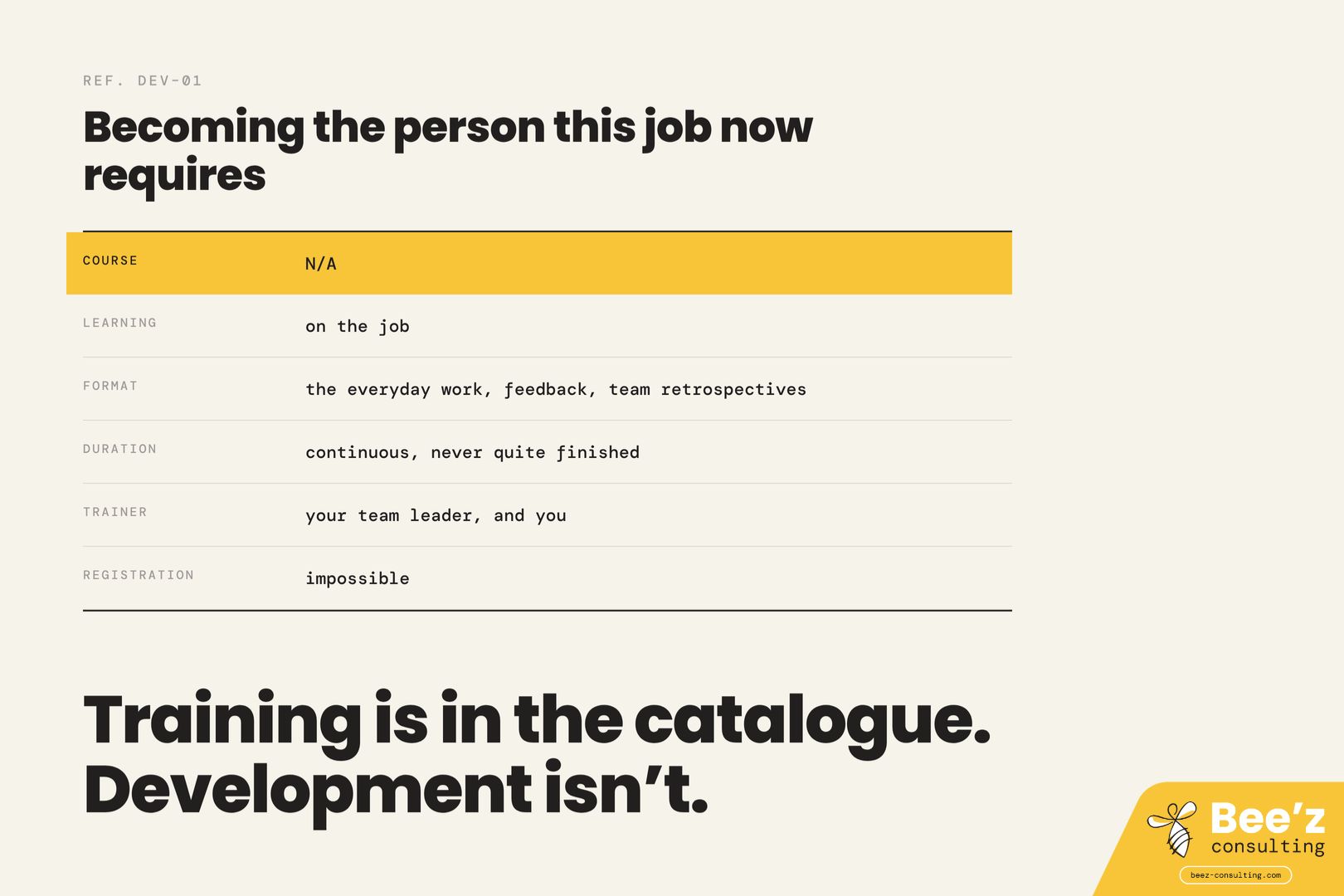
Development isn't decided once a year. What a development conversation contains, why it so rarely happens, and what actually builds capability at work.
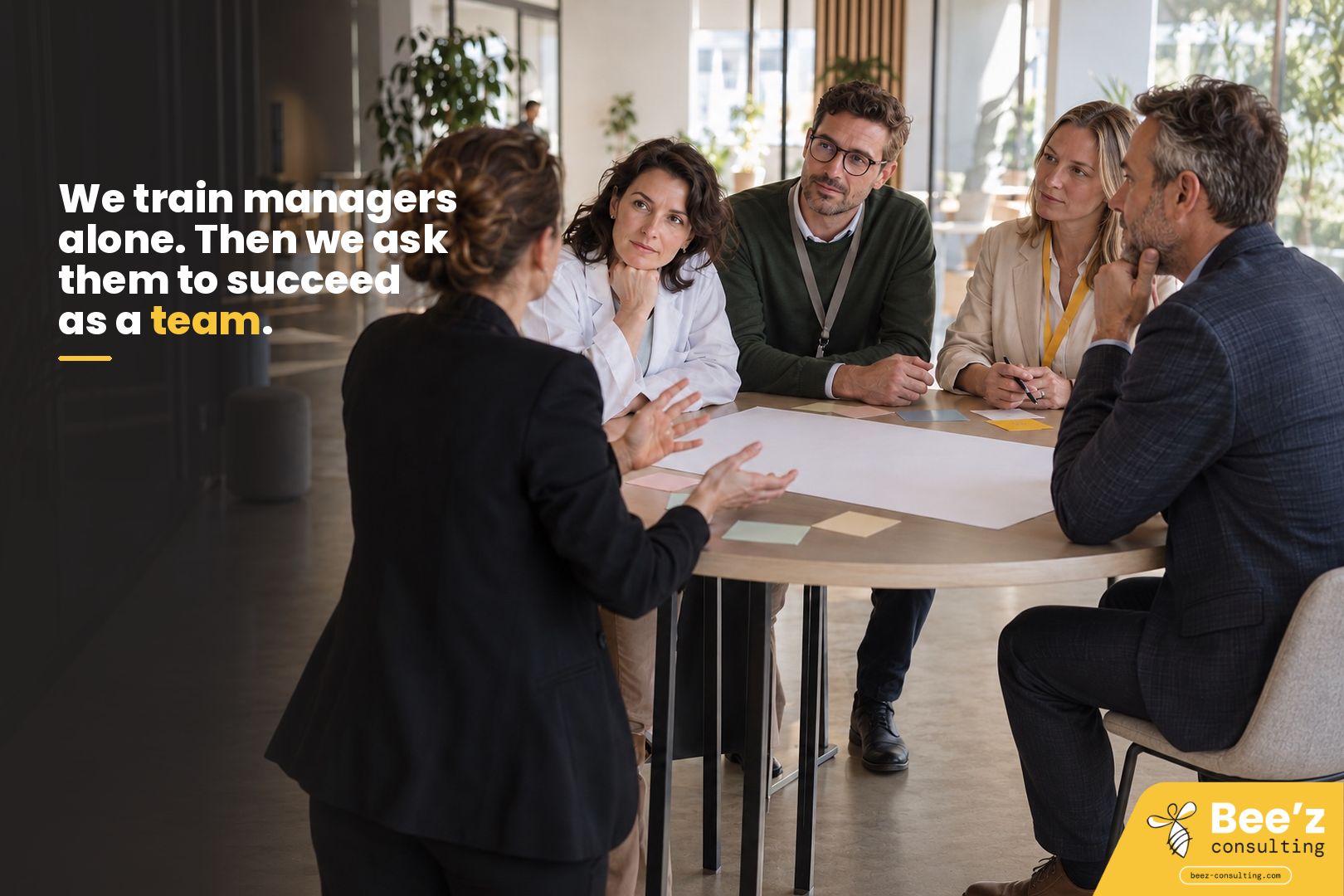
We train managers alone, then ask them to succeed as a team. What clinical simulation teaches management training, in every sector.
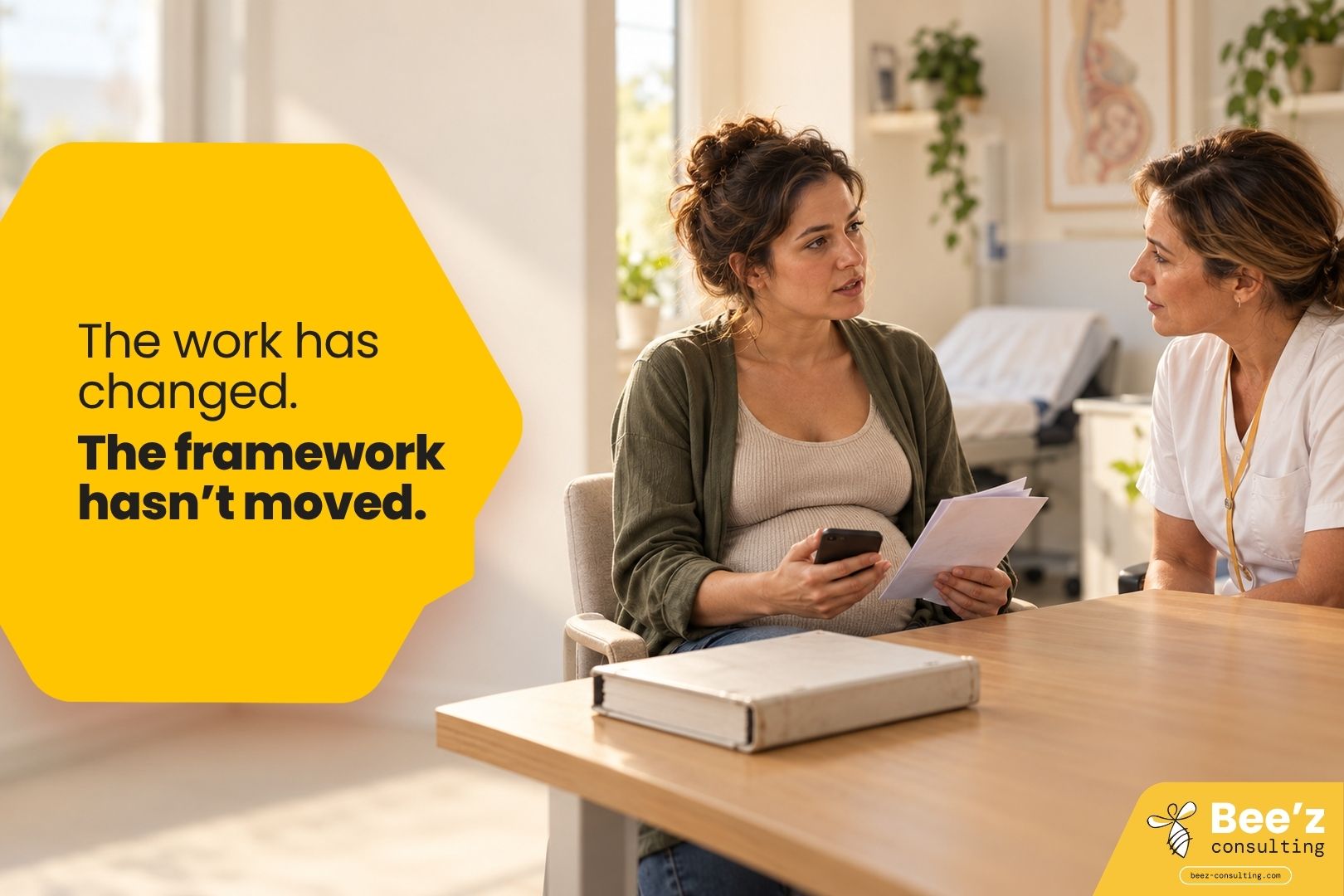
When development, recruitment and performance stop building the capabilities you need, your competency framework may be the cause. Three shifts, one test.

