Digitalization
3 min read

Why Organizational Culture Is So Hard to Change — and What To Do About It

Published on
May 30, 2025

Culture eats strategy for breakfast. And still, we underinvest in it.

‍

According to Gartner, aligning workforce behaviors with your desired culture can increase performance on revenue goals by +9%.
Yet only 31% of HR leaders believe their culture supports performance.

Wait, what?

If culture is that powerful, why do so few companies manage to shape it intentionally?

‍

Because culture isn’t a campaign. It’s a collective mindset.

‍

As mindset is to a person, culture is to the company.

And if you've ever tried changing someone’s mindset — especially your own — you know it’s no walk in the park.

Culture isn’t a set of values stuck on a wall. It’s the accumulation of thousands of micro-behaviors, habits, rituals, norms, and beliefs — often unconscious — that shape how people show up every day.

Which means you can’t just “roll out” culture change.
You have to co-create it. Live it. Embody it. Repeat it. Until it sticks.

‍

Why most culture transformations fall flat

‍

Most transformation efforts fail not because the strategy is wrong — but because the culture wasn’t ready for it.

And here’s the kicker: culture change doesn’t happen after the operational redesign.
It needs to be embedded within the transformation.

‍

Here’s what typically goes wrong:

  • Leaders treat culture as a side project, not a core lever.
  • Communication is top-down, sterile, and vague.
  • Employees aren’t involved in defining the future — just asked to comply.
  • Change is pushed through via training and town halls instead of participation and co-construction.
  • The existing culture (which made the old model work) is never examined, challenged, or reshaped.

So what happens?
💥 Resistance. Confusion. Fatigue.
And eventually... back to the old habits.

‍

Want a different result? Change how you change.

‍

The only way to transform your organization’s culture is to treat mindset as your lead metric — not just KPIs and dashboards.

You need a cultural navigation system: something that helps your leadership team stay aligned on the destination, spot cultural blockers early, and course-correct fast.

At Bee’z, we call this a Cultural Alignment Map:

  • Where are we today (honestly)?
  • Where do we need to be (behaviorally, emotionally, socially)?
  • What beliefs need to shift to close that gap?
  • And who needs to be involved in defining — and embodying — that future?

Spoiler: the answer is everyone.

‍

Culture change doesn’t scale through email. It scales through ownership.

‍

The fastest way to shift culture is not through policies or posters.

It’s through deep participation.
Let your people build the “desired state” with you — not just adapt to it.

When employees shape the destination, they’re far more likely to:
✅ Own it
✅ Defend it
✅ Accelerate it

And that’s how cultural transformation becomes exponential, not exhausting

‍

‍

‍

So ask yourself…

‍

  • Does your organization have the right culture to thrive in this new era?
  • Are your behaviors aligned with your business ambitions?
  • What will you do — today — to start shifting the mindset that shapes tomorrow?

If you’re not sure where to start, we can help you build that map.

‍

At Bee’z Consulting, we help healthcare & life sciences leaders make culture a lever — not a liability.

‍

Whether you're merging entities, launching innovation programs, or transforming care delivery, your culture determines your success rate.

We support you in:

  • Mapping your existing culture honestly
  • Defining a future-ready behavioral blueprint
  • Involving teams in the process from Day 1
  • Equipping leaders to lead by example
  • Measuring mindset shifts — not just milestones

‍

📞 Book your free strategic consultation
We’ll help you design a culture shift that lasts — and lifts your entire organization forward.

‍

Bee’z Consulting
Bold change, powered by people.

marlene

Transformation starts
with
your people

Does one of these sound familiar?

A hospital or clinic that needs better performance, smoother patient pathways and teams that stay.
‍
A pharma, medtech or biotech company whose strategy gets lost on its way to the teams doing the work.

An organization in the middle of a transformation (merger, restructuring, new tools, AI) where middle managers carry the change without the means to lead it.

None of this is new. What makes the difference is how you tackle it: with the people who do the work, close to where it happens.

Latest articles

Stay informed with our field notes on transformation in healthcare and life sciences.
View all
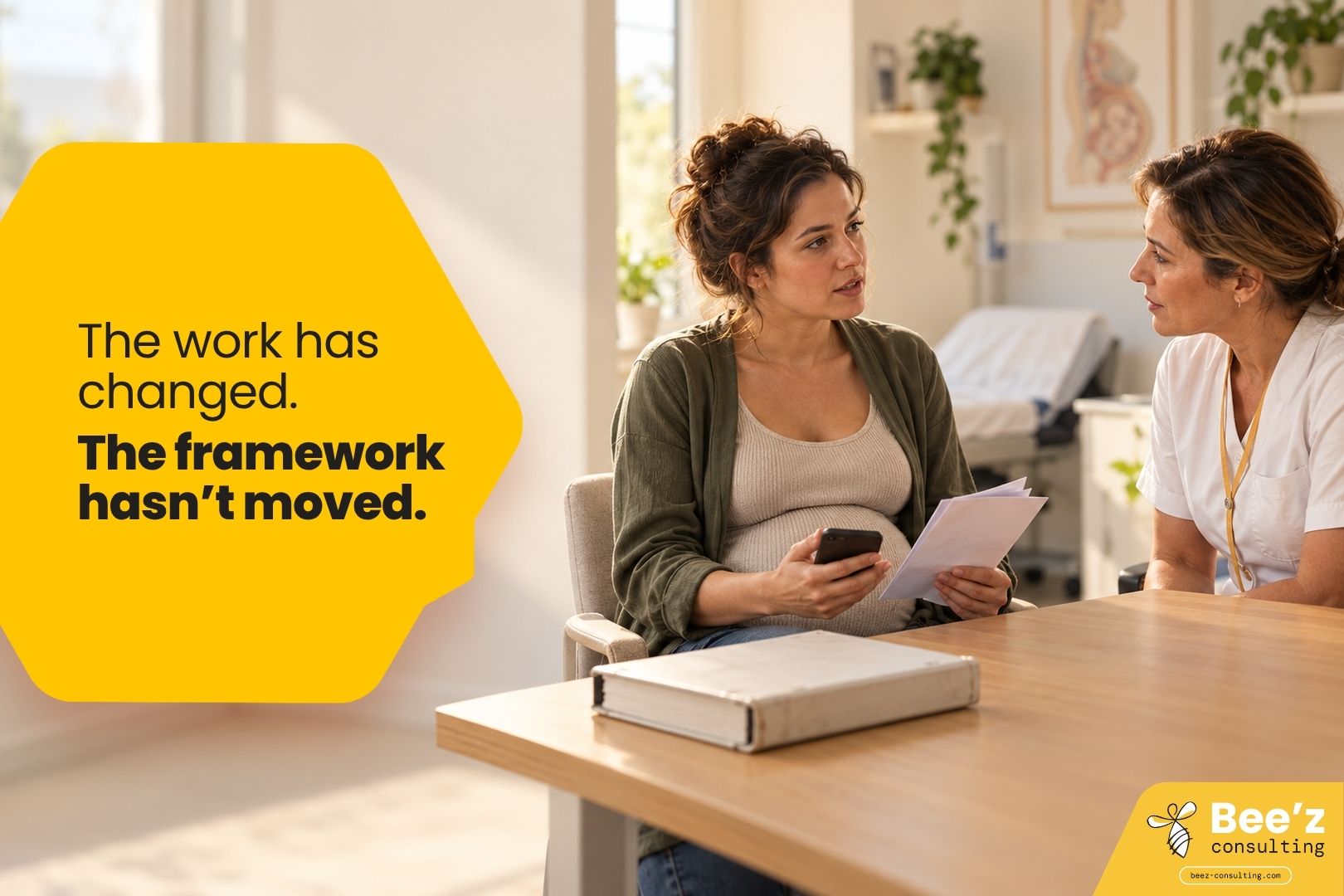
Pregnant woman with a phone and printed notes talks to an attentive midwife; a closed binder sits untouched on the desk
Healthcare
11 min

Your competency framework was built for work that no longer exists

When development, recruitment and performance stop building the capabilities you need, your competency framework may be the cause. Three shifts, one test.
Read more
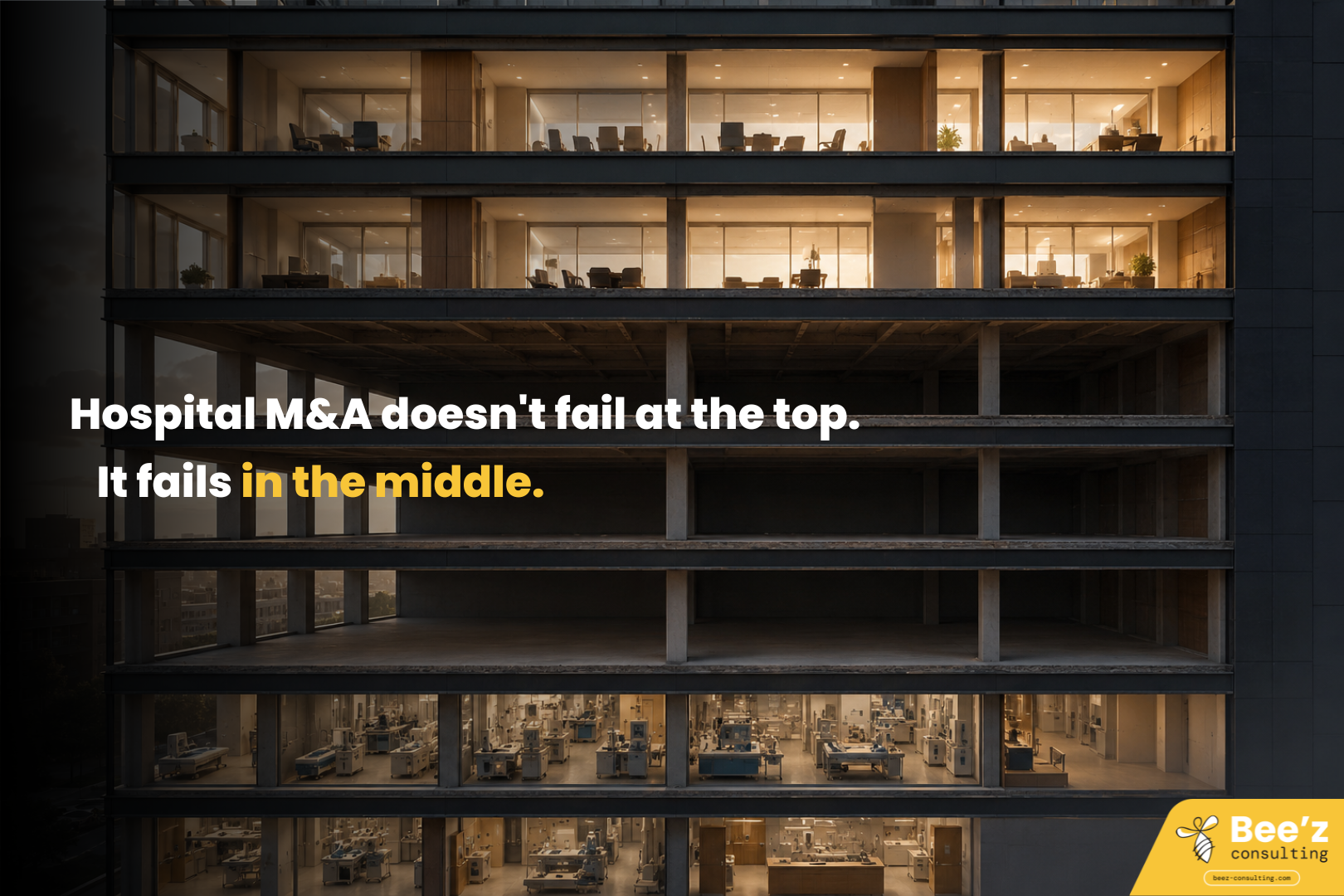
Cross-section of a hospital building with lit offices at top, clinical floors at bottom, hollow empty middle, dark headline overlay
Healthcare
9 min

Hospital M&A doesn't fail at the top. It fails in the middle.

Hospital M&A fails not at the top but in the middle layer. Here is what the governance vacuum looks like and what leaders who see it do differently.
Read more
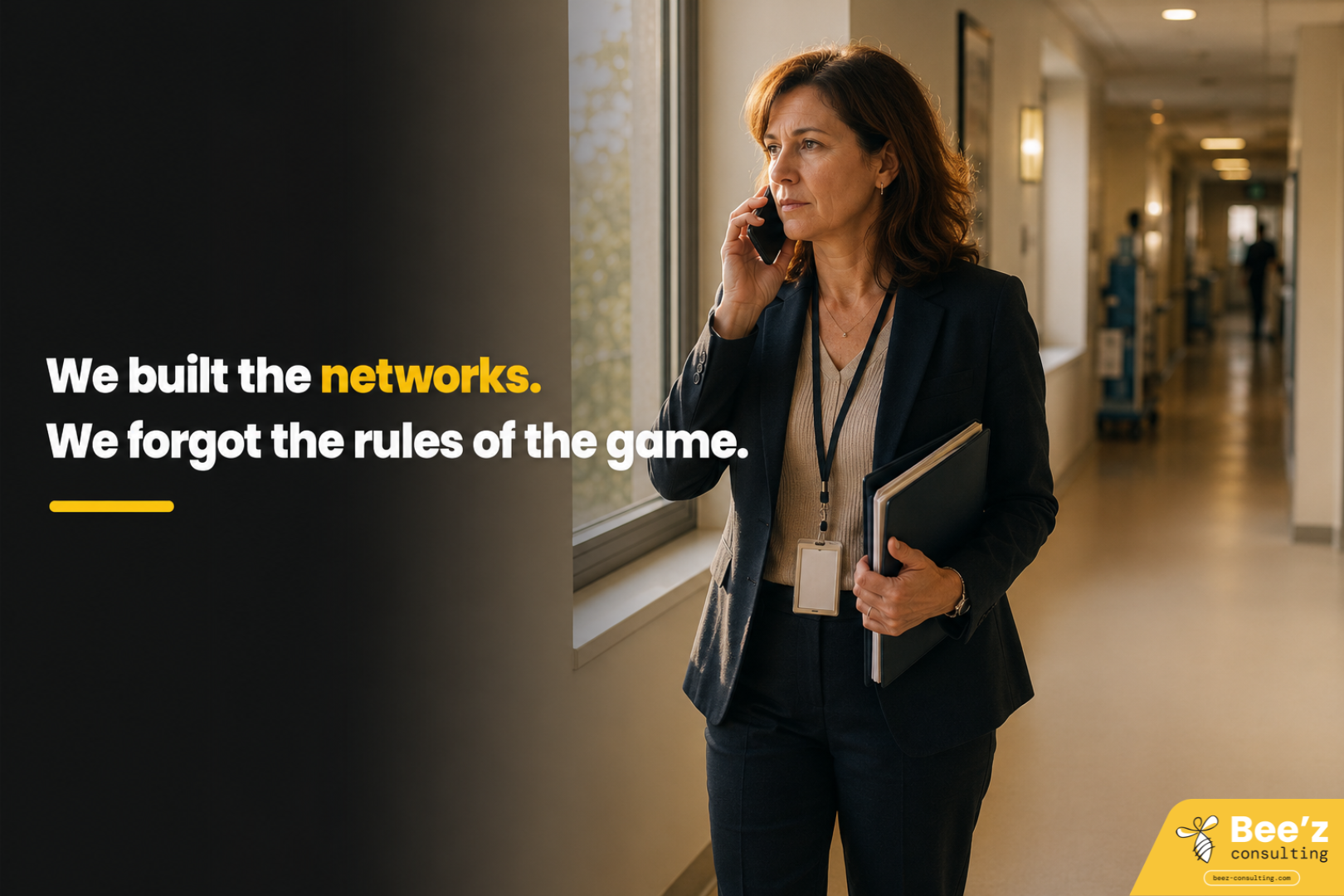
Healthcare coordinator on the phone in a hospital corridor, holding documents, looking out a window with focused expression.
Healthcare
8 min

Ambulatory Care Transformation: What Will Actually Make It Work

Across Europe, care is moving out of hospitals. What will determine whether it works: the operating rules inside networks, and preparing the people who run them. 3 operational keys.

Read more