

A new values poster goes up in the staff room. Two floors down, a nurse is still waiting for an answer to the scheduling problem she raised in the spring.
Culture is not what an organisation says. It is what people experience on an ordinary Tuesday.
Traditional workplace models were built for stability: clear hierarchies, standard processes, decisions made at the top. They struggle with the speed and complexity of today's work, and with what people now expect from it.
Employees, partners and patients want more than efficiency. They look for meaning, a degree of autonomy and real connection with the people they work with.
One-size-fits-all management is losing ground. People stay where they feel heard and useful, and they leave, sometimes quietly, where they feel like a cog.
This is not a generational whim. It is a practical question of retention, engagement and quality of work, especially in sectors already short of skilled people.
A human-centred organisation puts people, not hierarchies, at the centre of how work is designed. In practice, that means cultures that:
None of this removes structure. It changes what the structure is for: supporting the people who do the work, rather than controlling them.
In hospitals and clinics, organisational culture is more than a question of atmosphere.
In a systematic review published in BMJ Open, Jeffrey Braithwaite and colleagues analysed 62 studies on the link between organisational and workplace culture and patient outcomes. They found a consistently positive association across settings and countries: positive cultures went with lower mortality, fewer falls, fewer hospital-acquired infections and higher patient satisfaction.
The authors remain cautious: most studies were cross-sectional, so they show associations rather than proof of cause. But the direction is the same almost everywhere they looked.
The way teams work together shows up in the care patients receive.
That is why workplace culture in healthcare belongs on the leadership agenda, next to budgets and quality indicators, not in a separate HR file.
Most organisations have values. Fewer have values that people can recognise in daily decisions.
Cultural transformation rarely comes from a new charter or a communication campaign. It comes from repeated behaviours: how a manager reacts to a mistake, whether a concern raised in a meeting gets an answer, who is involved before a decision is taken.
Three signals usually reveal the gap between the stated culture and the lived one:
Middle managers carry most of this. They turn values into daily practice, or quietly let them fade. Giving them the time, the mandate and the support to lead their teams is often the most direct lever for changing a culture.
On 19 March, Bee'z Consulting hosted the first Lausanne gathering of the Hacking HR Global Community, a network of HR practitioners working on the future of work, HR innovation and technology. The theme was clear: "Changing traditional assumptions about how organisations work."
Silvina Layani, founder of Bee'z Consulting, facilitated the exchange between participants and two speakers, Michal Gradstein and Thilo Eckhart.
Their shared conclusion: the transformation of work begins with mindset, not technology.
At Bee'z, we see HR as one of the strongest levers for human-centred transformation, provided it is positioned as a partner in how work is designed, not only as an administrative function.
Three questions help to take stock:
At Bee'z Consulting, we help organisations rethink their culture, redesign their structures and reconnect people with their purpose, close to where the work happens.
Which of your stated values would your teams recognise in last week's decisions?
Let's talk: https://www.beez-consulting.com/contact
A human-centred workplace designs work around the people who do it rather than around hierarchy alone. It treats well-being as a condition of performance, makes collaboration across functions part of normal work, values learning over perfection and gives teams real room to decide. Structure remains, but its purpose shifts from controlling people to supporting them.
Organisational culture is the set of shared habits, beliefs and unwritten rules that shape how people behave at work. It shows in daily decisions: how mistakes are handled, who is consulted, whether problems are raised or kept quiet. Stated values are only part of it. The culture people actually experience is the one that drives behaviour.
Cultural transformation is a deliberate change in the behaviours, decision habits and unwritten rules of an organisation. It rarely comes from a new charter or campaign. It happens when leaders and managers change what they do repeatedly: how they react to errors, how they involve teams and how they follow up on concerns. It usually takes time and steady attention.
In healthcare, culture affects patient care directly. A systematic review in BMJ Open by Braithwaite and colleagues, covering 62 studies, found a consistently positive association between organisational and workplace culture and patient outcomes, including lower mortality, fewer falls, fewer hospital-acquired infections and higher patient satisfaction. Culture is therefore a quality and safety issue, not only an HR topic.
Look at daily signals rather than survey scores alone. Are problems raised early and answered? Do people disagree openly in meetings? Are workarounds rare, or have they become the norm? Healthy cultures show consistency between what leaders say and what teams experience, and staff feel able to speak up without fear of blame.
Stated values are what an organisation writes in its charter or on its walls. Lived culture is what people experience in daily work: how decisions are made, how mistakes are treated, who is listened to. When the two diverge, people believe the lived culture. Closing that gap is the core of most culture work.
Middle managers translate values into daily practice. They decide how a team handles mistakes, whether concerns get a response and how much room people have to act. When they are overloaded or lack a clear mandate, even well-designed culture initiatives fade. Supporting them with time, training and authority is often the most direct way to change a culture.
HR can be one of the strongest levers for human-centred change when it is involved in how work is designed, not only in administration. That includes shaping management practices, supporting managers, rethinking roles and career paths and using people data to spot where the lived culture drifts from the intended one.
There is no fixed timeline, but meaningful change usually takes months to years rather than weeks. Early signals, such as faster responses to concerns or more open discussion in meetings, can appear within a few months when leaders change their own behaviours. Lasting change depends on repeated practice and on structures that reinforce the new habits.
Hacking HR is a global community of HR practitioners working at the intersection of the future of work, HR innovation and technology. It organises local gatherings where professionals share practices and challenge traditional assumptions about how organisations work. Bee'z Consulting hosted the first Lausanne gathering, facilitated by its founder, Silvina Layani.


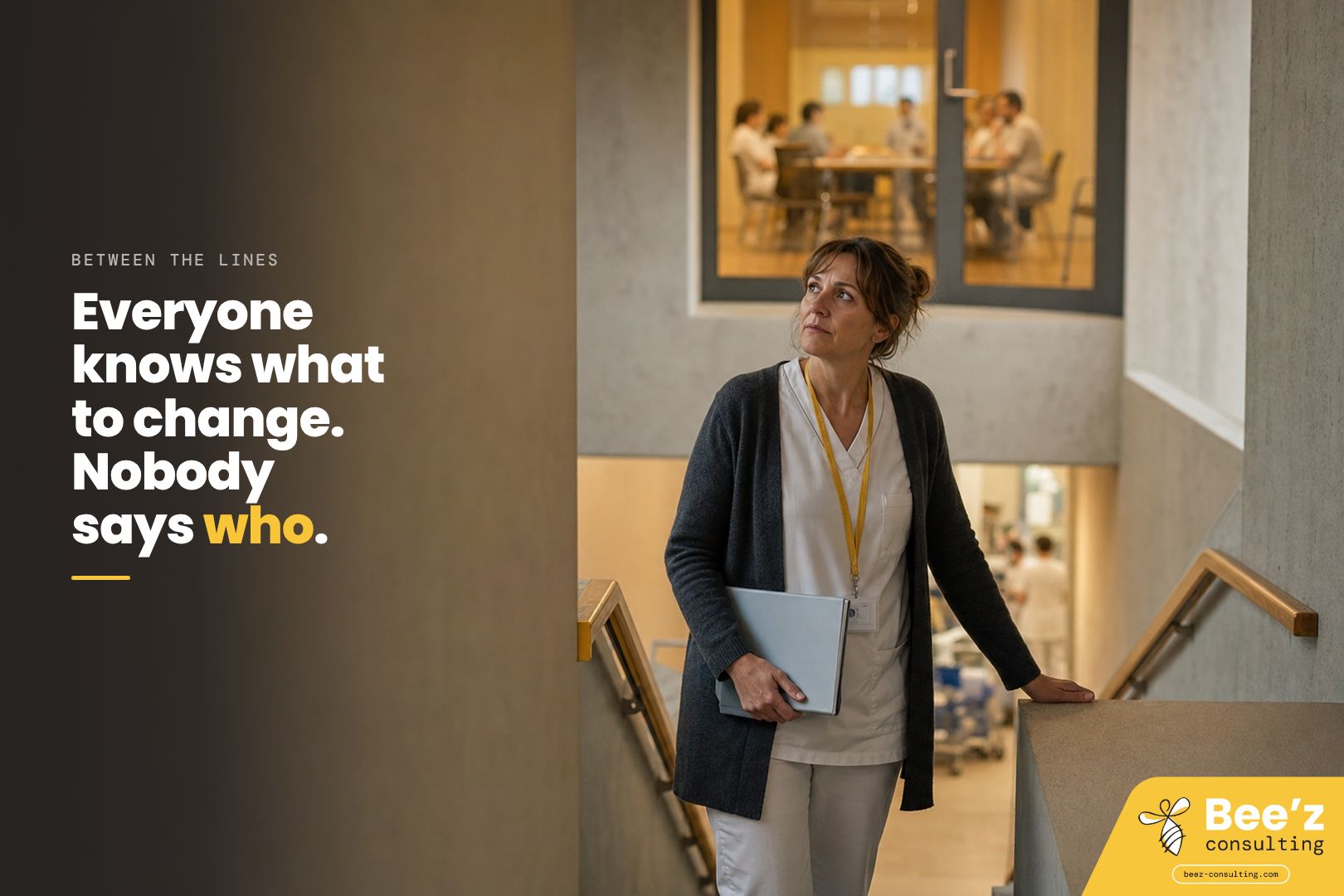
Change management in healthcare: the 2025-2026 reports list every lever. None says who translates the strategy in the units, or how to prepare them.

Agile in healthcare works when teams, not tools, change. What agile really means for hospitals, why implementation stalls, and 6 practical steps.
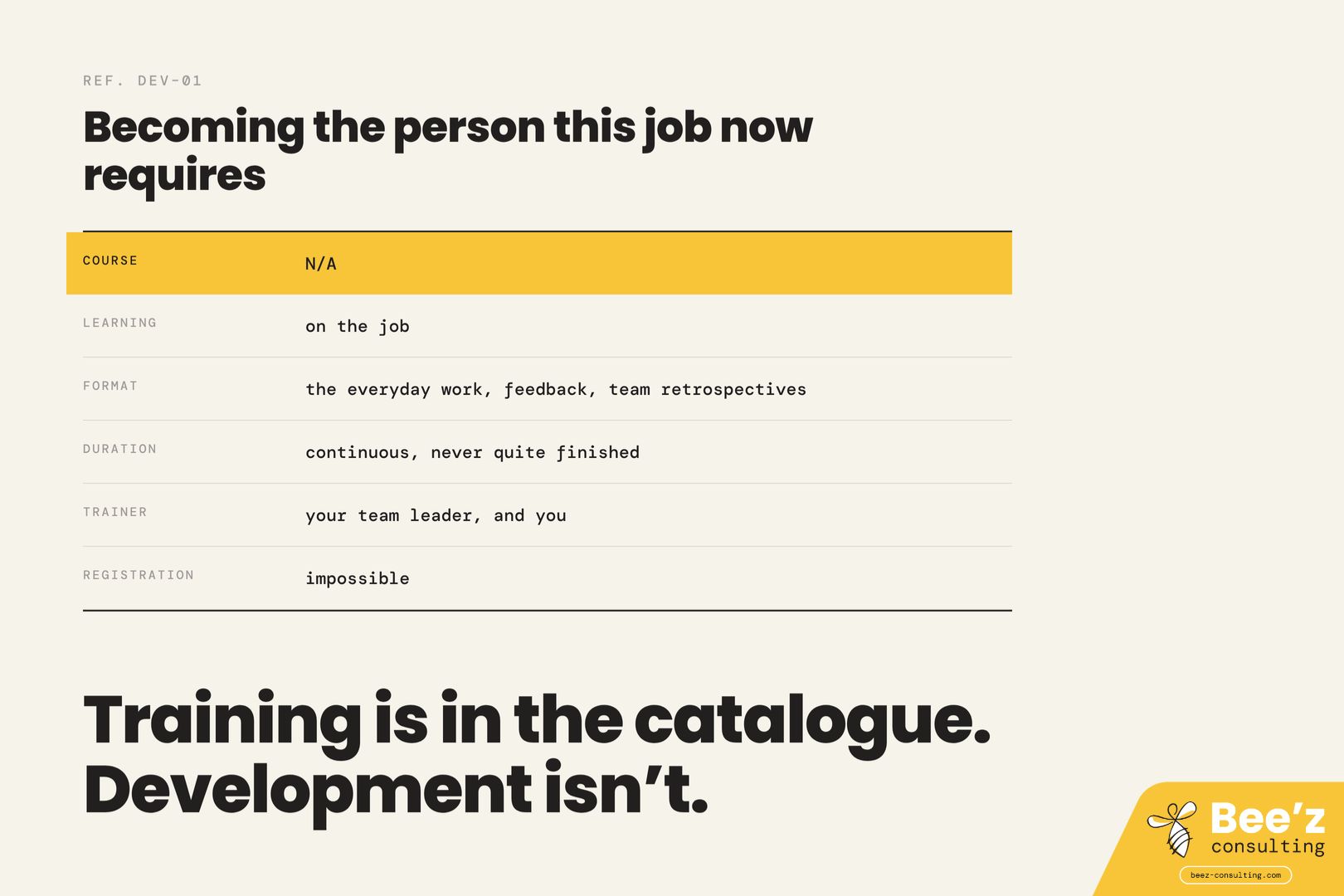
Development isn't decided once a year. What a development conversation contains, why it so rarely happens, and what actually builds capability at work.

